

News
10
Jul
4-Door Steel Lockers: What Facility Managers Should Know Before Placing a Bulk Order
Every facility manager eventually runs into the same procurement problem: members, students, or employees need somewhere secure to put their belongings, and the storage furniture already on site is either outdated, undersized, or simply not holding up to daily wear. The 4-door steel locker is one of the most common answers to this problem — but "steel locker" covers a wide range of build quality, and not every option on the market is built for the same duty cycle.
This piece walks through how a 4-door steel locker actually gets evaluated in practice, using the kind of questions that come up when a gym, school, or factory is sourcing lockers at volume rather than buying one or two units retail.
Why the 4-Door Configuration Is the Default Choice for So Many Facilities
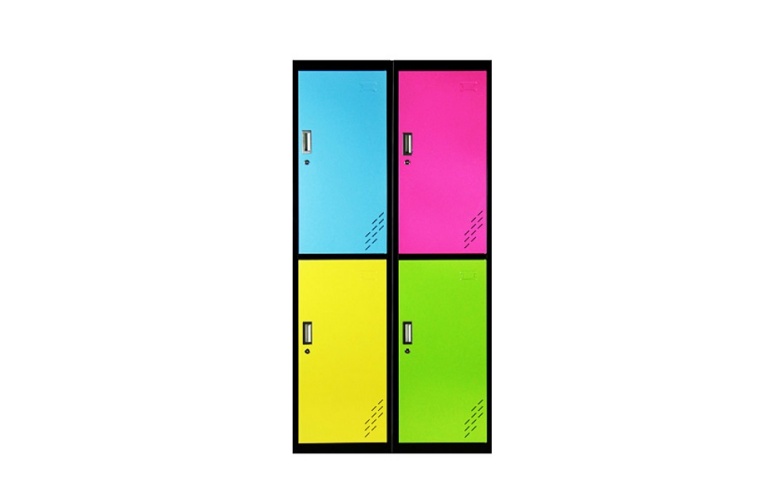
A 4-door steel locker cabinet splits one vertical unit into four separate, independently lockable compartments — typically within a footprint around 900mm wide by 450mm deep by roughly 1800mm tall. That configuration tends to be the sweet spot between two extremes: single or double-door lockers that eat up too much wall space per user, and 6-door or 12-door configurations where each compartment becomes too small for anything beyond a jacket and a phone.
For gyms, this middle-ground compartment size is large enough for a gym bag, shoes, and a change of clothes. For schools, it accommodates textbooks and a backpack without forcing students to leave items behind. For workplaces and factories, it's sized well for a uniform, a helmet, and a lunch bag. That versatility is a big part of why the 4-door steel locker remains the most frequently ordered configuration across gym locker, school locker, and employee locker room projects.
The Spec That Actually Determines Locker Lifespan: Plate Thickness
When two steel lockers look identical in a product photo, plate thickness is usually the variable quietly separating a locker that lasts eight years from one that starts denting and rusting within eighteen months.
Cold-rolled steel plate thickness for commercial lockers typically ranges from about 0.5mm on the lighter end to 1.2mm on the heavier end, measured before the paint or powder coating is applied. Lighter gauges reduce cost and work reasonably well in lower-traffic, lower-impact settings — an office break room, for instance. Heavier gauges are the better call for gym locker rooms, school hallways, and industrial changing areas, where lockers get slammed shut dozens of times a day and occasionally take a kick or a dropped weight plate.
Buyers sourcing at volume should ask suppliers to specify plate thickness explicitly in the quotation, rather than accepting a generic "heavy duty" label without a number attached to it.
Surface Finish: The Detail That Determines How the Locker Ages
Beyond raw steel thickness, surface treatment is what actually determines how a locker holds up against moisture, scratching, and general wear over years of use. Two finishing methods are standard in commercial steel locker manufacturing: epoxy coating and electrostatic powder coating. Both improve corrosion resistance meaningfully over untreated or minimally coated steel, and both are worth confirming as standard (not optional/upgrade) on any quote for a bulk steel locker order.
Ventilation is a related detail that's easy to overlook until it becomes a maintenance headache. Locker doors with built-in ventilation slits reduce moisture buildup and odor inside the compartment — a meaningful factor for gym lockers and sports locker rooms specifically, where damp gear sitting in a sealed metal box for hours is a fairly reliable way to generate a smell complaint.
Customization: Matching the Locker to the Facility, Not the Other Way Around
Bulk buyers — schools ordering for an entire hallway, gyms outfitting a new location, distributors stocking multiple client sites — generally have more flexibility than the standard product listing suggests. Common customizable parameters for a 4-door steel locker include:
Color, usually available across a range of RAL color codes to match branding or interior design
Plate thickness, adjustable within the standard range based on expected usage intensity
Door labeling and numbering, useful for schools and workplaces that need to assign lockers to specific individuals
Knocked-down (KD) shipping structure, which keeps the cabinet flat-packed for efficient container loading and simpler on-site assembly, rather than shipping fully assembled units that waste container space
That last point matters more than it might seem for anyone calculating landed cost on a large order. A knocked-down structure typically allows a 20-foot container to hold around 450 units and a 40-foot high-cube container to hold roughly 970 units — a meaningfully better shipping economics than pre-assembled cabinets, which take up disproportionate container volume relative to their unit count.
A Few Sourcing Questions Worth Asking Before You Commit to an Order
For anyone about to place a bulk steel locker order — particularly cross-border — a short list of questions tends to catch the issues that show up later if they're skipped upfront:
What's the exact plate thickness, in millimeters, not just a "heavy duty" label? Get a number in writing.
What surface treatment is standard versus optional? Confirm epoxy or powder coating isn't an upcharge.
What's the container loading capacity for a knocked-down order at this size? This directly affects your per-unit shipping cost.
What are the standard payment terms and lead time? A common structure is 30% deposit via T/T with the balance due against the bill of lading copy, with delivery typically arranged within roughly 25 days of payment confirmation — though this varies by supplier and order volume.
Can compartment count, door size, or labeling be adjusted for this specific project? Not every supplier treats these as standard customization, so it's worth confirming rather than assuming.
Where 4-Door Steel Lockers Get Used Most
In practice, this locker format shows up across a fairly consistent set of facility types:
Gyms and fitness centers, for member storage
Schools and universities, for student lockers in hallways and changing rooms
Factories and industrial sites, for uniforms and protective equipment
Workplaces, for employee break rooms and changing areas
Swimming pools, parks, and community centers
Stadiums and sports venues, for event-day storage
Hospitals and healthcare facilities, for staff locker rooms
The consistency across these use cases is part of why steel locker manufacturers tend to offer one adaptable platform — same core cabinet, different finish and configuration — rather than building entirely separate product lines per industry.
FAQ
What size is a standard 4-door steel locker?
Most standard units run approximately 1800mm in height, 900mm in width, and 450mm in depth, though exact dimensions can shift slightly with customization.
What plate thickness should I choose for a gym or school locker room?
Higher-traffic environments like gyms and schools generally benefit from a heavier gauge within the 0.5mm–1.2mm range. It's worth discussing expected usage intensity directly with the supplier to land on the right thickness for your budget.
Can I get lockers in a specific color to match my facility branding?
Yes, most manufacturers offer a range of RAL color options for bulk orders, along with door labeling or numbering if needed.
How are steel lockers typically shipped for large orders?
Most commercial steel lockers ship in a knocked-down (KD), flat-packed structure for efficient container loading, then get assembled on-site — which also reduces per-unit shipping cost compared to pre-assembled units.
What payment terms are standard for bulk locker orders?
A common arrangement is 30% deposit paid via T/T, with the remaining balance due against the bill of lading copy, though specific terms can vary by supplier and order size.
Are these lockers suitable for damp environments like pool areas or gym locker rooms?
Ventilation slits built into the doors help manage moisture and odor for gym and pool-adjacent use. For consistently high-humidity or outdoor installations, it's worth confirming additional protective coating options with the manufacturer.
How long does production and delivery typically take for a bulk order?
Delivery is commonly arranged within about 25 days of payment confirmation, though this depends on order volume, customization scope, and current production schedules.
If you're planning a bulk steel locker order for a gym, school, or workplace project, sharing your facility layout, expected unit count, and any branding requirements upfront is the most reliable way to get an accurate quote rather than comparing base list prices across suppliers.
Contact Us
📞 Phone/WhatsApp: +86 132 1355 7186
📧 Email: sales@buysmartlocker.co
Our Contact
Minno Furtniture
Customize smart storage lockers,parcel delivery lockers, key management cabinet,Vending machines,Office/School and home furniture.
-
Call For Inquiry
-
Send Us Email
sales@buysmartlocker.com
Need Help For Project!
We are ready to help your next projects, let’s work together
 WhatsApp
 sales@buysmartlocker.com
 +8613213557186