

News
22
Jun
How Can Western European Workshops & Garages Use Tool Cabinets to Finally Get Organised?
Let me paint a scene for you. It’s a Monday morning in a busy auto shop just outside Frankfurt. Three mechanics, four cars waiting, and one mechanic is on his knees, digging through a pile of old toolboxes, muttering something about a missing 13mm socket. I saw the exact same thing in a workshop near Lyon a few weeks later – same story, different language. And last month, a carpenter in the Cotswolds told me he spends at least 15 minutes every day just hunting for tools that should be in their place.
I’ve talked to mechanics in Germany, tradespeople in France, and garage enthusiasts in the UK. The problem is universal: tools get scattered, benches get buried, and every minute spent searching is a minute not earning money. A proper tool cabinet – or Werkstattschrank as they say in Germany, armoire d'atelier in France – fixes that. Not by magic, but by giving every tool a home, keeping them secure, and letting your team spend their time working instead of hunting.
What Is a Tool Cabinet, really?
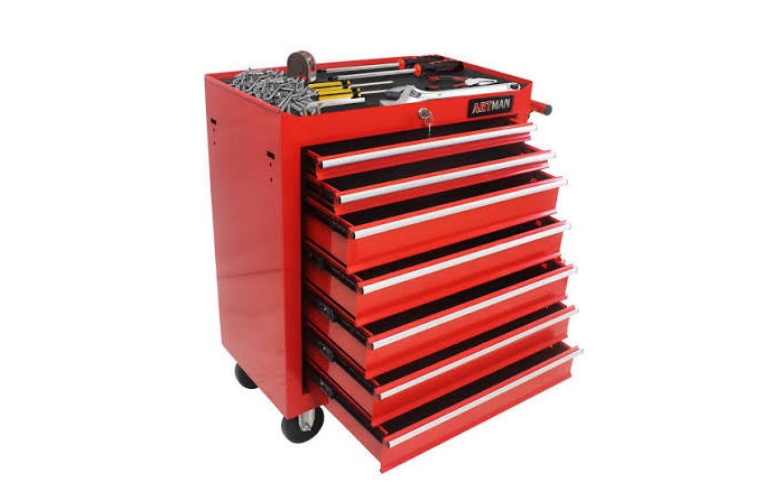
It’s a heavyduty, multidrawer storage unit – often on wheels – designed to hold everything from screwdrivers to impact wrenches. No more rummaging. You pull open a drawer, grab what you need, close it, and get back to the job. A good tool cabinet also becomes a mobile workbench, a secure lockbox for expensive gear, and an organisation system that pays for itself in a few months.
European consumers and professionals typically prioritise durability and functionality over price. And in a market where precision engineering and quality craftsmanship are highly valued, a wellbuilt tool cabinet isn't just a nicetohave – it's an essential piece of workshop equipment.
Why Western European Workshops Need Better Tool Storage
Let's be honest – workshops across Western Europe face real challenges. Whether it's the damp, chilly air of a British garage, the humidity of a French basement workshop, or the demands of a highvolume German auto shop, tool storage has to work hard.
The Germany Tool Storage Products Market alone is a mature, competitive industry serving both professional tradespeople and DIY enthusiasts. Across the region, there's a growing demand for innovative, versatile storage solutions that offer efficient organisation, durability, and portability. Consumers are increasingly seeking products that help them stay organised and get work done faster.
But beyond the product trends, there's the real cost of wasted time. A mechanic who spends 15 minutes a day looking for tools loses over an hour a week – nearly a full working week per year. In a shop charging €80/hour, that's over €4,000 lost annually, just from disorganisation. Add the cost of replacing lost or damaged tools, and the numbers get even uglier.
A highquality tool cabinet isn't a luxury. It's a profit centre.
Does It Actually Make Financial Sense?
Quick example for a twomechanic shop in, say, Berlin or Lyon. Each waste 12 minutes a day hunting for sockets and wrenches. That's 24 minutes a day, 100 hours a year. At €60/hour, that's €6,000 lost. Two rolling tool cabinets – heavygauge steel, ballbearing drawers, worktop – cost around €3,000–5,000 total. Payback in 6–10 months. After that, pure savings
Home garage user? A smaller rolling cart pays for itself the first time you finish a weekend project without losing your temper.
What Features Actually Matter (Skip the Fluff)
Build quality for Western European conditions: Heavygauge coldrolled steel – at least 1.5mm for the body. Powdercoat finish that resists scratches, oil, and moisture. Drawers that glide smoothly – double ballbearing slides, not cheap nylon that fails after a year. European buyers prioritise durability and quality, and that's exactly what we deliver.
Drawer layout: Mix of shallow (for spanners and screwdrivers), medium (for sockets and pliers), and deep (for power tools and grinders). Adjustable dividers inside drawers so you can customfit compartments for your specific tools.
Mobility: 5″ or 6″ casters – two fixed, two swivelling with brakes. Roll across concrete without rattling. Casters that lock firmly – important when you're torquing a bolt.
Security: Central locking – one key lock all drawers. For shared workshops, electronic locks with keypad or RFID give you a full audit trail. Advanced locking systems for expert security are a must.
Workbench integration: Solid rubber or wood top. Some models come with a builtin 230V power strip with USB ports – perfect for charging cordless batteries. Power cable access for power tools is increasingly important in modern workshops.
Modular design: The trend across Western Europe is towards compact, spacesaving modular tool chests and stackable systems that optimise workspace efficiency. Our modular storage units are designed to connect easily, creating bespoke storage solutions that are as tall, wide, or compact as you need.
Who's Actually Buying Tool Cabinets Across Western Europe?
· Auto repair shops & dealerships – Rolling chests next to the lift. Faster turnaround means more cars per day.
· Industrial maintenance facilities – Lockable cabinets for electrical meters, fasteners, safety gear.
· Home garages & car enthusiasts – Weekend warriors who want to find their tools without wasting time.
· Construction companies – Mobile tool cabinets that move between sites.
· Schools & vocational training colleges – Secure storage for student tools. Electronic locks for controlled access.
· Woodworking shops – Chisels, planes, measuring tools – all organised and protected.
· The growing DIY market – With the rising trend of DIY projects across Europe, home users are increasingly investing in professionalgrade storage.
Add shipping within Western Europe and custom branding (your logo on the front). Compared to losing thousands of euros a year in wasted labour and lost tools, it's a nobrainer.
A Few Things People Always Ask Me
Can these handle damp British garages or French basements? Yes – the powdercoat finish is corrosionresistant, and we offer stainless steel options for highhumidity environments.
Are the drawers strong enough for heavy tools? Rated for 70 kg per drawer. Double ballbearing slides – the same quality you'd expect from premium European brands.
Custom colour to match my brand? Any RAL colour. Logo stamping or engraving also available.
Builtin power for battery charging? Some models come with a 230V power strip and USB port – standard for the region (Schuko, UK, or French plugs available).
Try one before buying a fleet? One unit, 30day trial. No minimum order quantity.
Who Makes These Tool Cabinets?
We're Minno Office Furniture. Over ten years in steel office furniture – we know how to build cabinets that take a beating. Now we focus on workshop storage: tool cabinets, rolling workbenches, parts storage, and custom garage systems.
Why do Western European businesses choose Minno?
· Factorydirect pricing – no middleman. You pay for the steel, the slides, and the labour.
· Customisation without crazy fees – drawer sizes, colours, logos, locks, power strips – we do it all.
· Built for Western Europe – 230V power strips (if equipped), metric measurements, support during CET hours. Real people, not bots.
· Test one first – minimum order is one unit.
· No hidden costs – shipping and lead times upfront.
· Quality that lasts – in a market where European consumers prioritise durability and functionality over price, we deliver exactly that.
We're the team behind buysmartlocker.com. Already have tool cabinets in auto shops from Germany to France to the UK, and home garages across the region.
Ready to stop losing time and tools? Send us a message. Tell us roughly how many drawers you need, what types of tools you store, and whether you need a rolling cabinet or a fixed workbench. We'll send a spec sheet, price list, and – if you're serious – a sample unit with a refundable deposit. No pressure, no endless sales calls. Just good storage at a fair price.
Our Contact
Minno Furtniture
Customize smart storage lockers,parcel delivery lockers, key management cabinet,Vending machines,Office/School and home furniture.
-
Call For Inquiry
-
Send Us Email
sales@buysmartlocker.com
Need Help For Project!
We are ready to help your next projects, let’s work together
 WhatsApp
 sales@buysmartlocker.com
 +8613213557186