

News
29
Jun
Single Door Smart Fridge Vending Machine: The B2B Buyer's Complete Guide to Weight Sensor Retail Technology
Somewhere between the coffee machine in the break room and a full staffed café, there's a gap that most commercial operators have just quietly tolerated for years. Employees want real food — not a bag of chips from a spiral coil machine. Guests want cold drinks and fresh meals at 11 PM. Students want something edible between lectures. And none of them particularly want to interact with a cashier to get it.
The single door smart fridge vending machine with weight sensor technology was built for exactly this gap. Not as a novelty, and not as a placeholder until something better comes along. As the actual solution.
This guide covers everything a B2B buyer needs to evaluate before purchasing: how the technology works, where it performs best, what the real cost picture looks like, and what questions to ask before signing anything.
What Makes a "Smart" Fridge Vending Machine Different
The term gets used loosely. Here's what it actually means in a machine worth buying.
A conventional vending machine uses spiral coils or elevator trays to push a specific product to a pickup slot. The product catalog is limited by physical mechanism. Irregular shapes don't work. Variable portions are impossible. And every transaction requires the machine to do something mechanical — which means moving parts, which means failure points.
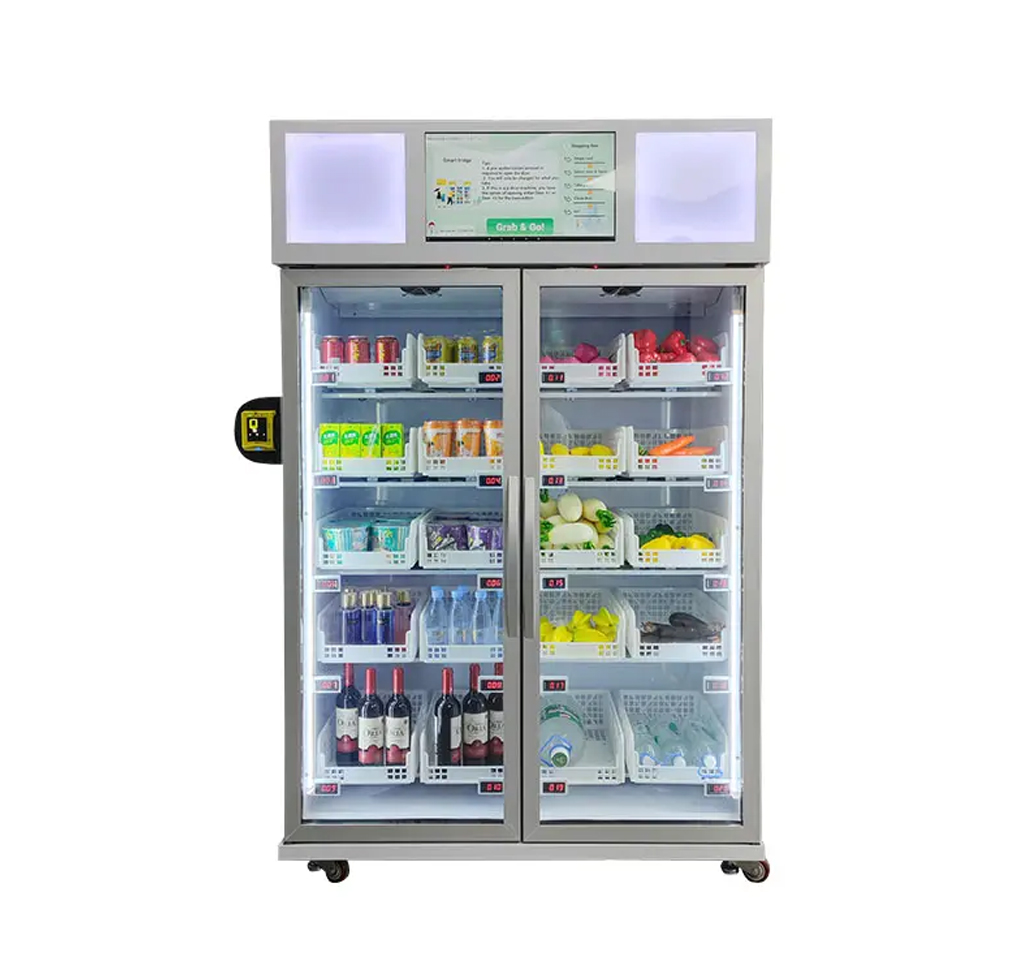
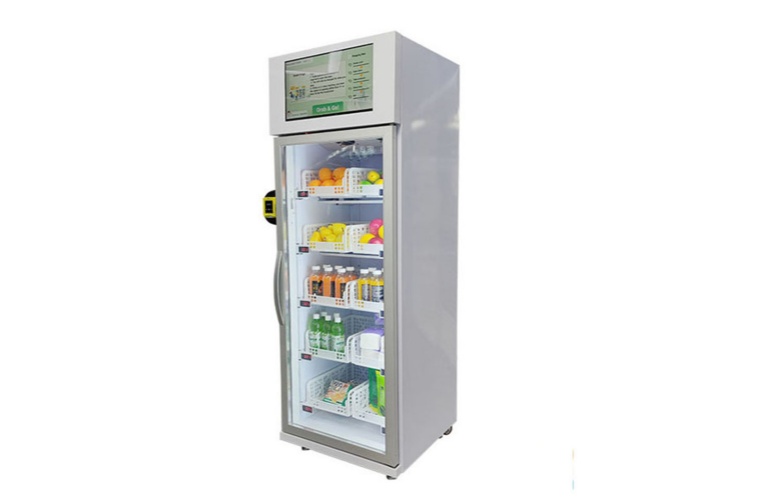
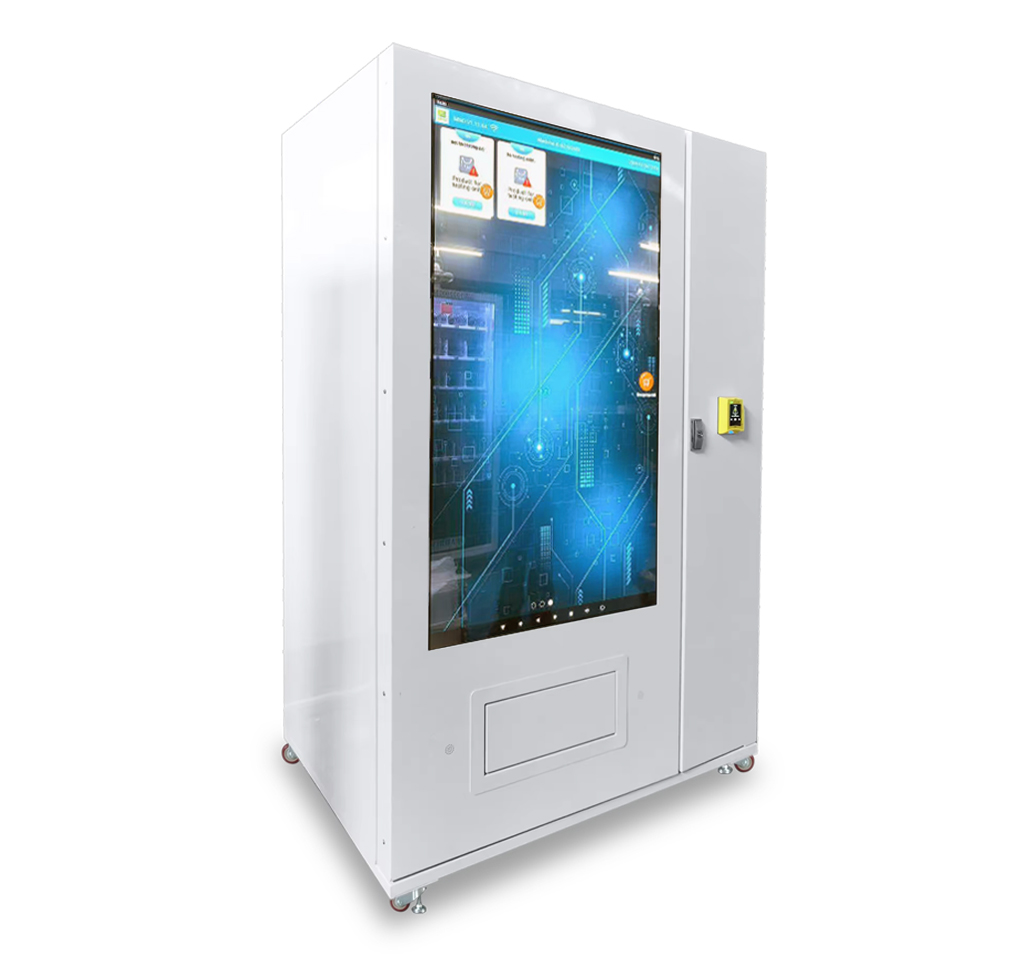
A smart fridge vending machine removes most of that machinery entirely. The refrigerated cabinet holds products on open basket trays, visible through a full glass door. The customer scans a card or QR code to authenticate, opens the door, takes what they want, and closes the door. Weight sensors on each tray detect exactly what was removed — down to increments as small as 10 grams. The system calculates the charge and processes the payment automatically. The door closes. The transaction is complete in roughly 10 seconds.
No coils. No motors. No dispensing mechanism. The only moving part is the door.
This "tag, grab, enjoy" model is what separates weight-sensing smart fridge technology from everything that came before it in the unattended retail category.
The Weight Sensor Technology: How It Actually Works
This is the piece that B2B buyers most often want to understand before they trust it with real inventory.
Each goods tray in the MINNO single door smart fridge vending machine sits on a dedicated weight sensor platform. When a customer opens the door after authentication, the system registers the starting weight of every tray simultaneously. When the door closes, it registers the ending weight. The difference — calculated per tray, per product — determines what was taken.
The sensors detect changes as small as 10 grams. In practice, this means the system can distinguish between a 200g item and a 250g item on the same tray, which matters when you're selling products by weight rather than by unit — deli portions, fresh produce, salad bowls, protein packs.
The key implication for operators: products don't need to be pre-packaged into identical units. A tray of individually portioned salads, each weighing slightly differently, can be sold accurately. Irregular shapes — the products that break every traditional vending mechanism — are handled by the tray system without modification.
The basket tray design also means restocking is fast. Pull the tray, refill it, slide it back in. There's no alignment required, no coil reconfiguration, no technician needed for a product range change.
Hardware Specifications Worth Knowing
The MINNO single door smart fridge vending machine specs that matter for a procurement decision:
Physical dimensions: 660mm (W) × 680mm (D) × 2000mm (H). The footprint is roughly 0.45 square meters — smaller than most buyers expect for a full-height unit. It fits in corridors, break room corners, lobby alcoves, and retail floor positions where a larger machine wouldn't.
Cooling range: Standard refrigeration operates between 3°C and 20°C. A freezer configuration is available, running from -18°C to 20°C — covering ice cream, frozen meals, and temperature-sensitive medical or pharmaceutical products.
Capacity: 5 to 10 goods trays depending on configuration, with basket trays accommodating a wide range of product sizes. The capacity is sufficient for a location with moderate daily traffic; high-volume locations typically run a double-door unit instead.
Screen: 21.5-inch non-touch display. The screen size matters more than it might seem — it's the primary advertising surface, running video and image promotions between transactions. A full HD display at this size is visible from several meters away in a typical commercial corridor.
Operating system: Android 11.1. This matters because it means the management software runs on a stable, widely-supported platform with genuine remote management capability — not a proprietary embedded system that requires manufacturer involvement for every software change.
Payment: Card reader standard. Additional payment modules — QR code, NFC, mobile payment integration — can be configured depending on market requirements.
Connectivity: 4G and Wi-Fi, enabling full remote management functionality.
Certification: CE certified. For buyers in European markets, this is a procurement prerequisite, not a bonus.
Warranty: 18 months on hardware.
Build quality note: 22mm sheet metal construction, described by MINNO as the thickest in the category. The compressor uses R290 refrigerant — a natural refrigerant with low global warming potential, which is relevant for operators with sustainability reporting requirements or operating in jurisdictions with refrigerant regulations.
The Software Layer: Remote Management for Multi-Location Operators
For B2B buyers managing more than one location, the software is where the operational ROI actually lives.
The MINNO management platform handles the following remotely, without requiring anyone to visit the machine:
Inventory monitoring in real time. Because the weight sensors log every transaction, the system knows current stock levels at any given moment. Operators can set low-stock alerts and plan restocking routes without physical checking.
Sales analytics by product, day, and time period. The platform surfaces which products sell, when, and at what rate. Products with poor sales can be identified and removed before they tie up tray space and cooling energy for weeks. High-velocity products can be given more tray positions.
Remote screen management. Promotional images and video advertisements can be uploaded and scheduled from the management dashboard. Screen brightness can be adjusted by time of day. The screen and internal lighting can be switched off during low-traffic hours — relevant for locations where the machine operates overnight in an empty office or dormitory corridor.
Price management. Product prices can be updated remotely across a fleet of machines simultaneously. For operators running promotions or adjusting pricing in response to supply cost changes, this removes the need to visit each unit.
Remote reboot and system management. Software updates are pushed remotely. Android 11.1 as the base OS means the update pathway is stable and well-documented.
For an operator running 10 or 20 machines across a hotel group, university campus, or office park, this remote management capability is the difference between a scalable business and a logistics headache.
Where Single Door Smart Fridge Vending Machines Perform Best
The footprint and capacity of the single door unit make it well-suited to specific deployment contexts. Understanding where it fits — and where the double door unit makes more sense — saves buyers from mismatched installations.
Corporate offices and coworking spaces. The break room is the classic location, but the more interesting deployment is outside the break room — in a corridor near meeting rooms, on a specific floor with high headcount, or adjacent to a building entrance for the early-morning rush. The 24/7 availability means the machine covers the gap between when the kitchen closes and when staff stop working, which is often several hours.
Hotels and serviced apartments. Guest floor deployments replace or supplement minibars with a more visible, flexible, and lower-theft solution. Lobby installations handle the late check-in crowd who arrive after room service closes. The ability to sell toiletries alongside drinks and snacks in a single refrigerated unit simplifies the product mix.
University dormitories and student centers. Students eat at irregular hours. A smart fridge vending machine near a study hall or between residential blocks captures demand that dining halls miss entirely. The product range can include fresh meals, dairy, produce, and late-night snacks in a single unit.
Healthcare facilities. Hospital corridors, outpatient waiting areas, and staff break rooms are genuine high-potential deployments. Staff working night shifts have limited food access; patients' families may be present at all hours. The freezer configuration option extends the product range to include ice packs and temperature-sensitive items.
Logistics and factory floors. Production environments with shift workers and limited canteen hours are consistently underserved by conventional vending. A smart fridge with fresh food options improves the on-site food offering meaningfully without requiring kitchen infrastructure.
Airports and transport hubs. High footfall, time-pressured customers, and limited fresh food options create ideal conditions. The machine's speed — 10 seconds per transaction — handles queuing conditions that slower systems can't.
Specialty fresh food retail. Farmers, local producers, meal kit operators, and specialty food brands use smart fridge units as autonomous retail points that extend their sales hours beyond what staffed operations allow. A local farm selling eggs, cheese, and prepared foods 24/7 at a roadside location is a deployment type that has grown significantly.
The Real Cost Picture for B2B Buyers
The MINNO single door smart fridge vending machine is priced in the US$1,700–US$2,800 range depending on configuration. Freezer specification units run slightly higher.
The meaningful comparison isn't against a conventional vending machine — it's against the alternative ways of serving the same need.
A staffed kiosk serving a corporate break room costs considerably more in labor annually than the hardware cost of a smart fridge. A hotel minibar generates revenue but requires per-room restocking labor, high shrinkage rates, and billing disputes. A campus dining hall doesn't operate at 2 AM.
The relevant ROI calculation for most B2B buyers is: what does it cost to serve this location right now, and what does the machine need to generate monthly to beat that number? In most cases, the break-even point is faster than buyers initially estimate — particularly for locations where the current answer is "nothing, because it wasn't practical."
For operators placing multiple units, MINNO offers volume pricing and can discuss configuration packages covering installation, software setup, and ongoing support terms.
Customization Options for B2B Deployments
Unlike consumer-facing products, B2B hardware purchases often require specification flexibility. The MINNO single door smart fridge vending machine supports:
Branding and exterior finish. The machine exterior can be finished in custom colors or wrapped with brand graphics. For hotel groups, retail chains, or operators building a recognizable unattended retail identity, this matters.
Product tray configuration. The basket tray system accommodates different product sizes and weights. Tray layouts can be specified for the expected product mix — more small trays for snack-heavy deployments, fewer larger trays for meal-focused installations.
Payment module. Card reader is standard; alternative payment systems including QR code and NFC can be specified at order. For markets where cash remains relevant, this should be discussed before finalizing the order.
Temperature configuration. Refrigeration (3°C–20°C) or freezer (-18°C to 20°C) mode can be specified. Some operators request units configured for ambient temperature to handle non-perishable products — this is worth discussing for deployments with a mixed product catalog.
Language and regional settings. The Android-based system supports localization for different markets.
FAQ
Q: What types of products can a single door smart fridge vending machine sell?
Virtually anything that fits on a basket tray and falls within the temperature range of the configured unit. Refrigerated options include fresh meals, salads, sandwiches, dairy, beverages, fruit, yogurt, and chilled snacks. The freezer configuration adds ice cream, frozen meals, and temperature-sensitive items. Non-perishable products can also be placed in a refrigerated unit if the operator prefers a single machine for a mixed catalog. The weight sensor system handles products sold by unit or by weight, and accommodates irregular shapes that conventional vending mechanisms cannot.
Q: How accurate are the weight sensors, and what happens if a customer takes the wrong item?
The sensors detect weight changes as small as 10 grams. In practice, if a customer takes an item from one tray and places it on another before closing the door, the system recalculates based on final tray weights and charges correctly. The system logs each transaction with tray-level weight data, which can be reviewed remotely if a dispute arises.
Q: Can the machine operate without an internet connection?
The machine can complete transactions locally if the connection drops temporarily. However, remote management features — inventory monitoring, remote pricing, screen updates, sales analytics — require an active 4G or Wi-Fi connection. For deployments in locations with unreliable connectivity, this is worth discussing with the MINNO team before ordering.
Q: What payment methods are supported?
The standard configuration includes a card reader. QR code payment, NFC, and mobile payment integration can be added depending on the deployment market. For B2B operators considering a private membership or employee account model — where employees charge purchases to a company account — the platform supports this through the management software.
Q: How often does the machine need restocking, and how long does restocking take?
Restocking frequency depends entirely on product velocity and tray capacity. The remote inventory monitoring system flags low stock before the machine runs out, allowing operators to plan routes efficiently. The basket tray system means restocking is fast — trays slide out, are refilled, and slide back in. There's no mechanical reconfiguration required for a product range change.
Q: Is the machine suitable for outdoor installation?
The single door unit is designed for indoor use. For outdoor deployments, additional weather protection considerations apply — discuss this with the MINNO team, as enclosure options and placement requirements vary by climate and location type.
Q: What does the 18-month warranty cover?
The warranty covers hardware defects under normal operating conditions. MINNO provides video technical support, online support, and free spare parts within the warranty period. Specific terms should be confirmed in writing at the time of purchase, as coverage details may vary by region and deployment configuration.
Q: Can the machine be integrated with our existing ERP or inventory management system?
The management software supports data export and, for enterprise deployments, API-level integration with third-party platforms. This is a configuration question best addressed directly with MINNO's technical team during the quoting process, as integration complexity varies significantly by existing system.
Q: What is the minimum order quantity for B2B purchases?
Single unit orders are available. For multi-unit deployments, volume pricing and custom configuration packages can be discussed. Operators placing orders for 5 or more units should contact MINNO directly to discuss lead times, logistics, and commercial terms.
Q: How does the machine handle a power outage?
In the event of a power interruption, the machine door defaults to locked to prevent unauthorized access and protect product integrity. Temperature management during outages depends on outage duration and ambient conditions — the compressor resumes automatically when power is restored. For locations with unreliable power supply, an UPS (uninterruptible power supply) is worth considering.
For pricing, technical specifications, and to discuss a deployment — single unit or multi-location — contact the MINNO team at sales@buysmartlocker.com or visit the product page at buysmartlocker.com.
WhatsApp / Tel: +86 132 1355 7186
Our Contact
Minno Furtniture
Customize smart storage lockers,parcel delivery lockers, key management cabinet,Vending machines,Office/School and home furniture.
-
Call For Inquiry
-
Send Us Email
sales@buysmartlocker.com
Need Help For Project!
We are ready to help your next projects, let’s work together
 WhatsApp
 sales@buysmartlocker.com
 +8613213557186