

News
09
Jul
Smart Barcode Storage Lockers for Supermarkets and Retail: The Complete Sourcing Guide for B2B Buyers
Self-service storage has quietly become standard infrastructure in modern retail, transportation, and public venues. Behind that shift sits a specific category of equipment: the electronic barcode storage locker, also known as a self-service locker system, smart locker cabinet, or automated storage terminal. For sourcing managers, facility operators, and distributors evaluating suppliers in this space, understanding how this equipment actually works — and what separates a well-built unit from a low-cost import — matters more than the marketing copy on most product pages.
This guide walks through the technology, specifications, customization scope, and sourcing considerations for smart storage lockers, with a focus on supermarket and retail deployment.
The Rise of Self-Service Storage Locker Systems
Retail environments have changed. Foot traffic is higher, staff headcount is tighter, and customer expectations around convenience have shifted. A decade ago, manned storage counters were the default solution for bag and item storage in supermarkets, shopping malls, and transportation hubs. Today, that model is being replaced by unmanned, self-service storage locker systems — driven largely by labor cost pressure and the maturity of barcode recognition and IoT-enabled locker technology.
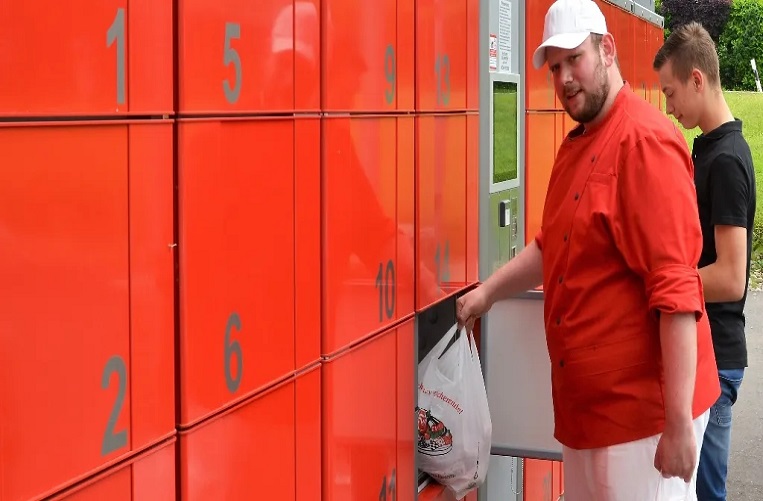
An electronic barcode locker system typically consists of a steel cabinet divided into individually lockable compartments, a central control unit, a barcode scanner or printer module, and (in networked deployments) a cloud or LAN-based management platform. The customer interacts with the system through a touchscreen or keypad interface, receives a printed or scanned barcode ticket, and uses that ticket to open and close their assigned compartment.
This basic architecture underlies a wide range of product names in the market — smart storage locker, self-service locker cabinet, electronic deposit locker, automated luggage locker, barcode access locker — but the underlying value proposition for a retail buyer is consistent: reduce staffing dependency, speed up customer flow, and improve traceability of stored items.
How Barcode Recognition Compares to Other Access Methods
When sourcing a commercial storage locker, buyers typically compare three access technologies:
Barcode / QR code recognition — fast, low-cost per unit, no registration required, ideal for high-turnover public environments like supermarkets and transit stations
Biometric access (fingerprint or facial recognition) — higher security, better suited to membership-based or staff-facing applications, generally higher unit cost
Password / PIN code access — simple and low-cost, but weaker security and higher risk of shared or forgotten codes
For supermarket and mass-retail deployment, barcode-based smart lockers tend to offer the best balance of speed, cost, and customer experience. There's no onboarding step, no app download, and no biometric data collection — a meaningful consideration in regions with strict data privacy regulations. Many manufacturers now also offer hybrid units combining barcode access with backup password entry, giving retail operators a fallback option without adding meaningful cost.
Core Specifications to Evaluate When Sourcing
Product listings across different manufacturers can look similar on the surface, but a handful of technical specifications tend to separate reliable commercial-grade equipment from lower-durability alternatives:
Cabinet construction material and plate thickness. Cold-rolled steel with electrostatic powder coating is the standard for commercial storage lockers, offering corrosion resistance and long-term structural stability. Plate thickness is a customizable spec that directly affects durability — thicker gauge steel is generally recommended for high-security or high-traffic deployments, while lighter gauges can reduce cost for lower-risk environments.
Compartment dimensions and configuration. A typical full-size electronic locker system might run around 1800mm in height, 2550mm in width, and 460mm in depth, with individual compartments sized around 280mm (H) x 300mm (W) x 430mm (D) — suitable for bags, backpacks, and mid-sized retail items. Compartment count, size mix (small/medium/large doors within a single unit), and overall footprint should all be customizable to match the buyer's floor plan and expected item sizes.
Control system and connectivity. Look for systems supporting both offline/local operation and networked remote management. Remote monitoring capability — usage logs, remote unlock, fault alerts — is increasingly a baseline expectation for multi-site retail chains rather than a premium add-on.
Access and billing flexibility. A locker system built for commercial deployment should support configurable billing logic: free access, time-limited free periods with overage fees, or pay-per-use models, along with support for local payment methods (cash, card, QR/mobile payment).
Halfway access function. For retail environments specifically, halfway (mid-session) access — the ability to reopen a compartment before final checkout — is a functional differentiator that matters more in practice than it might appear on a spec sheet, since shopping behavior rarely fits a single "store once, retrieve once" pattern.
Customization Options for OEM and Bulk Buyers
For distributors, retail chains, and facility management companies sourcing at volume, customization scope is often the deciding factor between suppliers. Common customizable parameters for smart barcode lockers include:
Cabinet dimensions (height, width, depth) to match available installation space
Compartment quantity and door size mix (small, medium, large compartments in one unit)
Steel plate thickness, for buyers prioritizing security or durability
Exterior color and surface finish, to align with store or brand identity
Logo printing and branding elements, common for chain retailers standardizing across locations
Access method configuration — barcode-only, barcode plus password, or hybrid biometric options
Software/backend customization, including billing rules, multilingual interface support, and integration with existing property management systems
Buyers evaluating manufacturers for OEM or private-label programs should request documentation on minimum order quantities, lead times for customized units, and whether panel thickness and dimension changes affect the base unit price or require a separate tooling cost.
Deployment Scenarios Beyond the Supermarket
While supermarket self-service storage is a primary use case, the same underlying smart locker technology is widely deployed across several verticals:
Transportation hubs. Airports, train stations, and bus terminals use barcode luggage lockers for short-term storage, often requiring larger compartment sizes and higher-security plate thickness given the value of stored items.
Tourism and cultural venues. Museums, theme parks, and scenic areas deploy compact storage lockers for visitor bags and personal items, typically prioritizing fast turnover and simple barcode-only access.
Shopping malls and retail chains. Multi-tenant retail environments benefit from centralized, remotely managed locker networks that can serve multiple stores from a shared installation.
Sports and fitness facilities. Gyms, swimming pools, and stadiums require moisture-resistant cabinet construction and often favor combined barcode-and-password access for member convenience.
Public institutions. Libraries, hospitals, and conference centers increasingly install self-service storage lockers to reduce front-desk workload and improve visitor flow.
Each of these verticals has slightly different requirements around compartment size, weatherproofing, and billing configuration, which reinforces why customization capability — not just base unit pricing — should be a core evaluation criterion when comparing smart locker manufacturers.
Evaluating a Manufacturer or Supplier
For B2B buyers — whether sourcing directly for a retail chain or purchasing for resale/distribution — a few practical due-diligence points are worth confirming before placing an order:
Warranty period and what it covers (control system vs. cabinet structure vs. software)
Availability and lead time for spare parts, particularly control boards and scanner modules
Installation and technical support options for overseas or remote deployment
Software update policy and whether remote management platform access is included or licensed separately
Certification and compliance documentation relevant to the buyer's target market
Suppliers that can provide reference installations, sample units, or third-party certification documentation generally represent lower sourcing risk, particularly for buyers placing container-volume orders sight-unseen.
Frequently Asked Questions
What is a smart barcode storage locker used for?
It's a self-service storage cabinet that lets customers or visitors store personal items — bags, luggage, retail purchases — in a locked compartment using a barcode ticket for access, without staff supervision.
Is barcode access secure enough for commercial use?
For most retail and public-storage applications, yes. Barcode tickets combined with a locked steel compartment provide adequate security for everyday item storage. Higher-value or higher-risk deployments sometimes add biometric or password backup for extra assurance.
Can I customize cabinet size, color, and plate thickness for a bulk order?
Yes, this is standard for most manufacturers serving B2B and OEM buyers. Providing your floor plan, expected item sizes, and branding requirements upfront typically speeds up quoting and production.
Does the locker system need an internet connection?
Core storage and retrieval functions generally work offline. An internet or LAN connection is needed only if remote management, usage analytics, or multi-site monitoring is required.
What payment and billing models are supported?
Configurations vary by manufacturer, but most systems support free access, time-based billing with overage charges, and pay-per-use models, along with local payment methods such as card, cash, or mobile QR payment.
How long does a typical smart locker system last?
With cold-rolled steel construction and proper maintenance, commercial-grade units are generally built for long-term deployment, though actual lifespan depends on plate thickness, usage frequency, and environmental exposure (indoor vs. outdoor installation).
What lead time should I expect for a customized bulk order?
This varies by manufacturer and order volume — standard configurations typically ship faster than fully customized dimensions or branding, so it's worth confirming production lead time as part of the initial quote request.
For retail chains, distributors, and facility operators evaluating smart storage locker suppliers, requesting a customized proposal based on actual site dimensions, expected foot traffic, and billing requirements is the most reliable way to compare true landed cost across manufacturers — rather than comparing base unit prices alone.
Contact Us
📞 Phone/WhatsApp: +86 132 1355 7186
📧 Email: sales@buysmartlocker.co
Our Contact
Minno Furtniture
Customize smart storage lockers,parcel delivery lockers, key management cabinet,Vending machines,Office/School and home furniture.
-
Call For Inquiry
-
Send Us Email
sales@buysmartlocker.com
Need Help For Project!
We are ready to help your next projects, let’s work together
 WhatsApp
 sales@buysmartlocker.com
 +8613213557186