

News
06
Jul
The Elevator Vending Machine With Auto Open Door: Why the Pickup Mechanism Changes Everything
Walk up to a traditional vending machine and the transaction ends one of two ways. Either the product drops successfully into the collection bin at the bottom — often with enough force to damage anything fragile — or it doesn't drop at all, stuck halfway down a spiral coil while your money is already gone. Neither outcome is ideal. For operators selling anything other than sealed snack bags or canned drinks, the coil-and-drop mechanism isn't a vending system. It's a product damage machine with a coin slot.
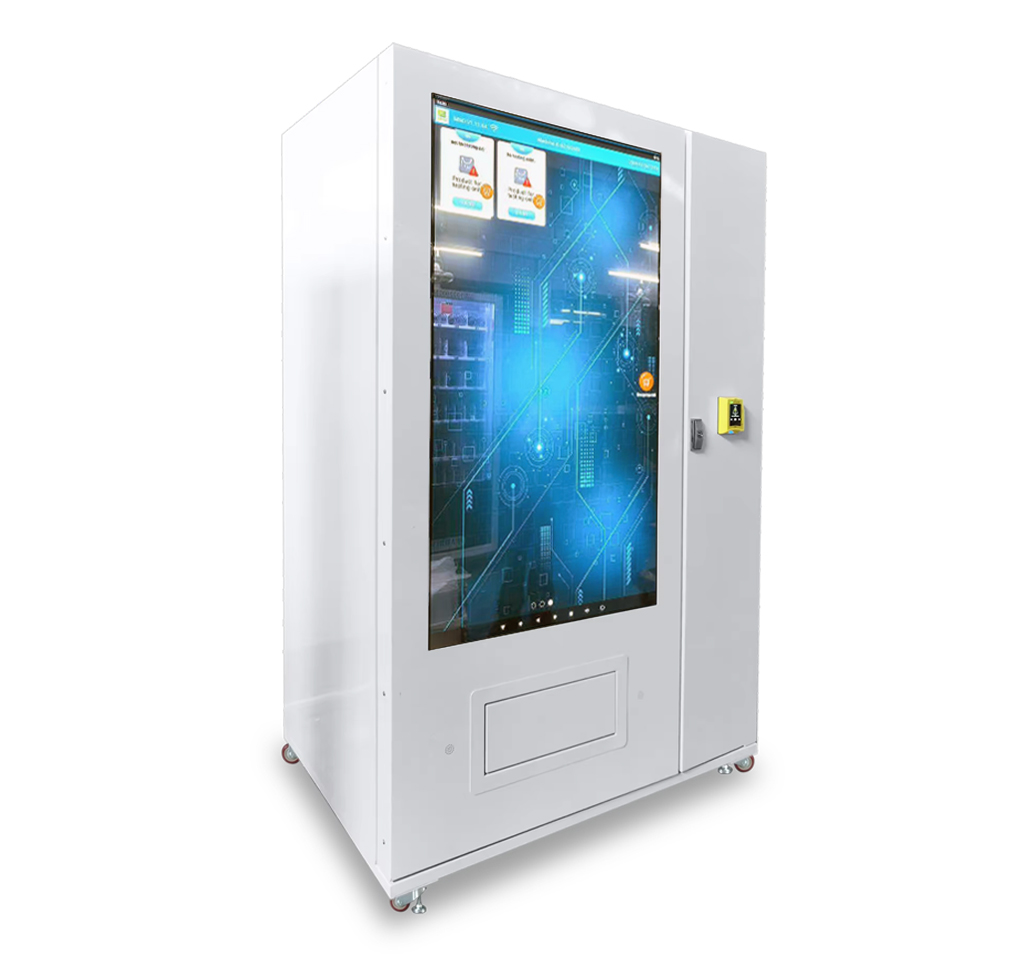
The MINNO Elevator Vending Machine with Auto Open Door is built around a fundamentally different answer to the question of how a product gets from the shelf to the customer. That answer — an XY-axis elevator that carries the product to a middle-height pickup door that opens automatically — changes not just the mechanics of the transaction but the entire range of products that can be viably sold, the entire customer experience of buying them, and the entire economics of operating the machine.
This article covers why that mechanism matters, what it enables, and what B2B operators evaluating elevator vending machines should understand before making a specification decision.
The Problem With Every Other Pickup Method
To understand why the elevator and auto-door combination is genuinely significant, it helps to be specific about what the alternatives actually do and where they fail.
Spiral coil machines push products off a rotating coil and let them fall. The fall distance is typically 50–80cm from the lowest shelf to the collection bin. For a sealed candy bar or a can of soda, this is fine. For a cupcake in a clear box, a salad in a bowl container, a fresh sandwich, a cosmetic item, or any product with a fragile or presentation-sensitive packaging, the fall creates real damage probability — cracked lids, crushed corners, displaced contents. The coil mechanism also constrains products to uniform dimensions that fit the coil geometry, which immediately excludes a large proportion of the product categories that have the most commercial potential in unattended retail.
Standard elevator machines solve the fall problem by using a mechanical arm to transport products to a collection bin. This is better, but the collection bin is still at the bottom of the machine — requiring the customer to bend down to retrieve their purchase. For anyone with limited mobility, for elderly customers, for anyone carrying bags or a child, and for the standard interaction that happens dozens of times a day in a busy location, bending to a knee-height bin is friction that doesn't need to exist.
The MINNO elevator with auto-open middle door solves both problems simultaneously. The XY-axis elevator — moving both horizontally and vertically — picks up the selected product from its tray position and carries it to a pickup door positioned at mid-height, roughly at waist level for an average adult. When the product arrives, the door opens automatically. The customer retrieves their purchase at a comfortable standing height. The door closes.
No drop. No fall distance. No bending down. No product damage from impact. No mechanism that constrains what shapes and sizes can be sold.
The XY Elevator: What It Actually Does
The XY-axis elevator mechanism is the technical core of this machine, and it's worth understanding specifically because it's what makes the product catalog flexibility possible.
A conventional elevator arm moves in one axis — typically vertically. It can pick up a product from a fixed horizontal position and deliver it to a collection point. This means shelving positions need to be aligned with the elevator's fixed horizontal range, which constrains the internal layout and the product dimensions the machine can accommodate.
An XY elevator moves in both horizontal and vertical axes independently. The elevator arm can position itself at any X-coordinate across the width of the machine before moving vertically to the correct shelf height. This means every slot in every row is accessible — the elevator addresses the full grid of the machine's interior without any position being out of range.
The direct pusher goods tray completes the system. Rather than relying on the product to fall or be swept into a carrier, the pusher actively moves the product from its tray position onto the elevator platform. This controlled handoff is what prevents the product damage that fall-based dispensing creates — the product moves horizontally at tray level, transfers to the elevator, and travels to the pickup door without ever being subjected to an uncontrolled drop.
For operators, the implication is straightforward: the product catalog for an elevator vending machine with XY axis is limited by the physical dimensions of the shelf slot, not by the shape, weight distribution, or fragility of the product. This is the mechanism that makes a cupcake vending machine, a salad vending machine, a fresh food vending machine, and a standard snack and drink vending machine all viable in the same hardware.
The Auto Open Door: More Than a Convenience Feature
The automatic opening pickup door is the customer-facing half of the system — the part that completes the transaction experience — and it's worth being specific about what it does beyond the obvious.
Mid-height pickup position. The pickup door is positioned at approximately waist height for an average adult — not at knee height, not at ankle height, not requiring any bending. This is the position at which most people naturally reach for objects in everyday life. The ergonomic choice is particularly significant for elderly users, for anyone with mobility limitations, and for parents managing children while making a purchase. A machine that anyone can use comfortably without a physical demand is a more commercially viable machine in a public or semi-public location.
Automatic door operation. The door opens without the customer needing to pull it. This sounds like a small detail — and in isolation, it is — but in the context of a vending transaction, every additional physical action the customer must take is friction that affects the experience. An auto-open door means the customer completes their selection on the touchscreen and simply receives their product. The mechanic of the transaction disappears, which is the right outcome for a retail experience.
Product protection during transit. Because the door remains closed until the elevator has delivered the product, the collection area is enclosed during the retrieval process. This prevents contamination, maintains temperature control on refrigerated products, and protects the interior of the machine from ambient conditions during the transaction — relevant for fresh food and refrigerated product deployments where hygiene and temperature integrity matter.
Refrigeration: The Cooling System That Enables Fresh Food Sales
The machine operates a refrigeration system maintaining 3°C to 20°C, adjustable across that range. This covers the full spectrum of chilled fresh food retail:
At the colder end of the range (3°C–8°C), the machine handles fresh salads, meal prep containers, dairy products, yogurt, fresh sandwiches, and any refrigerated item where cold chain integrity between production and consumption is a food safety requirement.
At the warmer end (8°C–20°C), the machine handles beverages that are better served chilled rather than cold, chocolate and confectionery that needs temperature protection without freezing, cosmetic products sensitive to heat, and any ambient-plus product that benefits from a controlled temperature environment.
The compressor uses R290 refrigerant — a natural refrigerant with a global warming potential of 3, compared to several hundred or thousand for synthetic alternatives. For operators in markets with refrigerant regulations, for buyers with sustainability reporting requirements, or for deployments seeking environmental certification, R290 is the specification that satisfies those requirements rather than creating a compliance issue down the line.
The 22mm sheet metal construction — specified as the thickest in the industry category — insulates the cooling chamber effectively, which reduces the energy draw of the refrigeration system and maintains temperature stability during the door-open phases of each transaction.
The 21.5-Inch Touchscreen: Retail Display and Management Interface
The 21.5-inch touchscreen is the customer interface and the machine's primary visual presence in the location. At this size — roughly equivalent to a desktop monitor — the display is visible from several meters away in a typical office lobby, hotel corridor, or retail environment.
The screen serves multiple commercial functions simultaneously:
Product discovery. Customers can browse the machine's full product catalog on screen, view product details including origin, expiration date, and ingredient information, and make selections without committing to a purchase. This is a meaningfully different experience from the standard vending machine interaction of pressing a code for a product you've already decided on — it supports impulse purchase behavior by making the product catalog browsable rather than requiring prior knowledge of what's available.
Shopping cart functionality. The machine supports a shopping cart model, allowing customers to select multiple items and purchase them in a single transaction. This increases average transaction value compared to single-item machines and creates the possibility of discount mechanics on multi-item purchases — configured through the management software.
Advertising display. Between and during transactions, the screen runs video and image advertisements or promotional content. For operators who have supplier co-op advertising arrangements, or who want to promote specific products within the machine, this screen is a commercial asset separate from the product sales themselves.
Management access. The touchscreen also provides the on-machine interface for maintenance and configuration — accessible through operator credentials.
The Software Platform: Remote Management Across a Machine Fleet
The management software is cloud-based and accessible remotely, which is where the operational economics of running a vending machine — or a network of them — actually live.
Real-time sales data and inventory monitoring. Operators see current stock levels, sales by product and time period, and inventory depletion rates without visiting the machine. Low-stock alerts fire before a slot empties, which allows restocking routes to be planned efficiently rather than reactively.
Remote price and discount management. Pricing can be updated remotely across all units simultaneously. Time-based discounts, promotional pricing, and multi-item discount rules are all configurable without a site visit — relevant for operators running promotional campaigns across a machine fleet or responding to supplier cost changes.
Remote operational control. Screen on/off, lighting on/off, business hours, and other operational parameters can all be set and adjusted remotely. For machines in locations that close overnight — office buildings, schools, corporate campuses — turning off the screen and lighting during non-operational hours reduces energy consumption without requiring a visit to the machine.
Member management. The system supports a membership or loyalty model where registered users receive discounts, earn points, or pay through a pre-loaded account rather than per-transaction payment. For corporate deployments where employee meal subsidies are part of the compensation package, this functionality supports a direct integration with the benefit rather than requiring employees to pay out of pocket and claim reimbursement.
Multi-language support. The interface is available in English, French, Spanish, German, Chinese, Japanese, Korean, Russian, Ukrainian, Hebrew, Slovenian, and additional languages. For international deployments, this removes the language barrier that limits adoption of single-language machines among non-native-speaking customer populations.
Payment: Every Method, Every Market
The machine supports the full range of commercial payment methods: coin, bill, card (with support for Nayax, ITL, ICT, Ingenico, MEI, PAX, and OTI card readers), e-wallet, and IC/ID card. The MDB standard protocol ensures compatibility with a wide range of third-party payment hardware.
For operators specifying a machine for a specific market, this breadth of payment support means the machine can be configured to the dominant payment method of that market rather than forcing customers to use an unfamiliar payment approach. A deployment in a market where QR code mobile payment dominates needs different payment configuration than one in a market where card tap is standard — and the machine supports both.
Where This Machine Gets Deployed
Corporate offices and business parks. The mid-height pickup door and touchscreen browsability make this machine appropriate for client-visible locations — lobby areas, executive floor break rooms, coworking spaces — as well as back-of-house employee areas. The product catalog flexibility allows a single machine to cover breakfast items, lunch options, afternoon snacks, beverages, and convenience items across the working day.
Hotels and hospitality properties. The machine operates as a full mini-bar alternative accessible from a corridor rather than requiring room service interaction. Fresh food, beverages, toiletries, travel essentials, and convenience items can all coexist in a single refrigerated unit. The mid-height pickup door and auto-open mechanism make the transaction experience consistent with the service standard expected in a hotel environment.
Universities and student residential buildings. The 24/7 operation, shopping cart functionality, and product range flexibility serve the irregular eating and shopping patterns of student populations. Academic supplies, fresh food, beverages, and personal care items in a single machine reduces the need for multiple separate vending units in a single location.
Hospitals and healthcare facilities. The mid-height pickup and ergonomic design are particularly relevant in healthcare settings where users may include patients with reduced mobility, elderly visitors, and clinical staff with limited time. Fresh food options alongside convenience items and basic medical supplies (OTC medication, hygiene products) serve a consistently underserved captive audience.
Fresh food specialty retail. Local food producers, bakeries, meal prep businesses, and specialty food operators use elevator vending machines as autonomous retail points that extend selling hours beyond staffed operation. The cupcake vending machine application is the signature example — a product that a standard coil machine would destroy, sold intact and presented correctly, 24 hours a day.
Airports and transport hubs. High-footfall, time-pressured customers who want fresh food quickly are the core use case. The touchscreen browsing, shopping cart, and fast transaction model suit the airport buying pattern better than traditional vending machine interaction.
Shopping malls and retail environments. The 21.5-inch screen provides visibility and advertising presence comparable to a staffed kiosk, with none of the labor overhead. The product flexibility allows the machine to be configured for the specific consumer demand profile of the location — a mall serving a demographic that skews younger has a different optimal product mix than one serving an older suburban demographic.
Specifications at a Glance
| Specification | Detail |
|---|---|
| Dimensions | 1220mm (W) × 960mm (D) × 2000mm (H) |
| Capacity | 5 floors × 8 slots (40 product positions) |
| Dispensing mechanism | XY-axis elevator + direct pusher tray |
| Pickup door | Mid-height, auto-open |
| Touchscreen | 21.5 inch |
| Cooling range | 3°C – 20°C (adjustable) |
| Refrigerant | R290 (low GWP, natural refrigerant) |
| Sheet metal | 22mm (thickest in category) |
| Power consumption | 500W |
| Payment methods | Coin, bill, card, e-wallet, IC/ID card |
| Card reader compatibility | Nayax, ITL, ICT, Ingenico, MEI, PAX, OTI |
| Protocol | MDB standard |
| Connectivity | Wi-Fi / 3G / 4G SIM card |
| Languages | 11+ including EN, FR, ES, DE, ZH, JA, KO, RU |
| Certification | CE certified |
| Warranty | 18 months |
| Gross weight | 340kg |
| Price range | US$3,300 – US$3,700 |
Frequently Asked Questions
Q: What types of products can the elevator vending machine actually sell — is it limited to cupcakes and salads?
The XY elevator and direct pusher tray mechanism is not product-specific. Any item that fits within the slot dimensions can be sold — fresh food including cupcakes, salads, sandwiches, yogurt, and meal prep containers; standard snacks and beverages; convenience items including toiletries, OTC medication, phone accessories, and stationery; and specialty retail products from local producers. The product catalog is constrained by physical slot dimensions and the cooling range, not by the dispensing mechanism. The cupcake and salad applications are highlighted because they represent products that conventional coil machines cannot handle — the machine is equally capable with standard vending products.
Q: How does the XY elevator prevent products from being damaged during dispensing?
The direct pusher tray moves the product horizontally at shelf level onto the elevator platform — no dropping, no falling, no uncontrolled transfer. The elevator then carries the product to the mid-height pickup door at a controlled speed. The entire journey from shelf to door is mechanically guided without any free-fall phase. For fragile products like boxed cupcakes, lidded salad containers, or glass-bottled beverages, this controlled movement is what makes reliable dispensing possible.
Q: Why is the mid-height pickup door important — can't customers just bend down to a lower collection bin?
They can, but they shouldn't have to — and the commercial and practical consequences of requiring it are real. A lower collection bin creates a friction point for elderly users, users with mobility limitations, users carrying children or bags, and any user in a formal or professional setting where bending to floor level is awkward. In hospitality environments particularly, the pickup experience is part of the product experience. A mid-height auto-open door delivers a purchase the way a counter service interaction would — at standing height, handed over directly, without physical effort from the customer.
Q: What's the restocking process — how long does it take and does it require a technician?
Restocking is operator-performed without technical assistance. Each slot is accessed through the front door, and products are loaded into the direct pusher trays. The management software tracks inventory levels per slot in real time and alerts operators to low-stock positions before they empty, which allows restocking routes to be planned rather than reactive. A full restock of a 40-slot machine takes approximately 20–30 minutes for an experienced operator.
Q: Can the machine operate in markets where mobile payment or QR code payment is the dominant method?
Yes. The payment system supports e-wallet and mobile payment integration alongside coin, bill, and card payment. The specific e-wallet and QR payment integrations available depend on the target market — this is a configuration question best addressed during the quoting process, as supported payment platforms vary by region.
Q: How is the refrigeration system maintained, and what happens if the temperature deviates from the set range?
The R290 compressor is a brand-unit specification for reliability and energy efficiency. The management software monitors temperature in real time and alerts the operator if the internal temperature deviates from the configured range — before product safety is compromised. Routine maintenance on the refrigeration system is minimal and follows standard commercial refrigeration service intervals. Specific maintenance terms are included in the 18-month hardware warranty.
Q: Does the shopping cart functionality work across all payment methods?
The shopping cart model — selecting multiple items before a single payment transaction — is supported across all payment methods that process transaction totals rather than per-item payment. Card, e-wallet, and IC/ID card payments naturally support multi-item transactions. For coin and bill payment, the cart functionality operates by accumulating credit before items are dispensed. The specific implementation should be confirmed during the software configuration discussion.
Q: What's the minimum order quantity, and what does the 18-month warranty cover?
The minimum order quantity is one unit. The 18-month warranty covers hardware defects under normal operating conditions and includes video technical support, online support, and free spare parts during the warranty period. The warranty does not cover damage from misuse, unauthorized modification, or failure to perform routine maintenance. Specific coverage terms should be confirmed in writing at the time of purchase.
Q: How does the remote management software handle a machine that's offline — for example, during a connectivity outage?
The machine can complete transactions locally when connectivity is interrupted — the payment system and dispensing mechanism operate independently of cloud connectivity. Transaction data is queued and synced when connectivity is restored. Remote management features — real-time inventory monitoring, remote pricing updates, alert notifications — require an active connection to function. For locations with unreliable connectivity, 4G SIM card connectivity provides a mobile network backup to Wi-Fi.
For specifications, configuration options, and pricing on the MINNO Elevator Vending Machine with Auto Open Door, visit buysmartlocker.com
Contact Us
📞 Phone/WhatsApp: +86 132 1355 7186
📧 Email: sales@buysmartlocker.co
Our Contact
Minno Furtniture
Customize smart storage lockers,parcel delivery lockers, key management cabinet,Vending machines,Office/School and home furniture.
-
Call For Inquiry
-
Send Us Email
sales@buysmartlocker.com
Need Help For Project!
We are ready to help your next projects, let’s work together
 WhatsApp
 sales@buysmartlocker.com
 +8613213557186