

News
11
Mar
The High Price of Cheap Storage Cabinets: Why Cutting Corners Costs More
In 2026, HR directors and facility managers are under immense pressure to optimize corporate budgets. When outfitting a new hybrid office, upgrading a factory floor, or renovating a staff breakroom, it is incredibly tempting to approve the purchase order from the lowest bidder. After all, a locker is just a metal box, right?
Wrong.
Treating enterprise storage as a race to the bottom is one of the most expensive mistakes a procurement team can make. Opting for cheap, poorly manufactured storage cabinets or low-tier "smart" lockers creates a chain reaction of hidden costs, operational downtime, and endless frustration.
Here is a breakdown of the true cost of cutting corners and why investing in high-quality storage infrastructure is the only way to protect your bottom line.
The Illusion of Savings: Upfront Cost vs. Total Cost of Ownership
When you purchase a budget storage cabinet, the "savings" only exist on the day the invoice is paid. Almost immediately, the Total Cost of Ownership (TCO) begins to skyrocket.
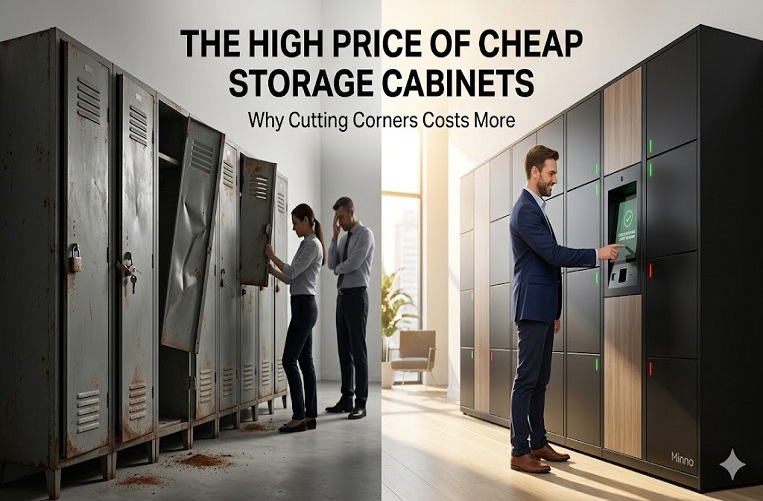
Cheap cabinets are typically manufactured using ultra-thin sheet metal, low-grade plastic hinges, and generic, uncertified electronic locks. Within the first six months of heavy commercial use, these components begin to fail. A door gets dented and won't close; a digital keypad stops registering touches; a lock jams, trapping an employee’s laptop or personal belongings inside.
When this happens, the money you "saved" is instantly wiped out by emergency locksmith fees, replacement parts, and the labor cost of your maintenance team constantly repairing the units.
Where Cheap Cabinets Fail the Hardest (The Hidden Costs)
The fallout from low-quality storage impacts every level of your organization:
1. The Administrative Nightmare: When a cheap electronic locker goes offline or a lock jams, who deals with it? Your HR administrators, IT staff, or facility managers. Instead of doing their actual jobs, highly paid professionals spend hours acting as tech support, manually overriding broken doors and fielding complaints from frustrated employees.
2. Security Vulnerabilities and Liability: Cheap cabinets use flimsy locking mechanisms that can easily be pried open. If your IT department is using these cabinets to store expensive testing equipment, or if employees are storing their wallets and smartphones, a break-in creates a massive liability and destroys workplace trust.
3. Software Abandonment: Many cheap "smart" lockers run on generic, white-labeled software. When bugs occur or mobile operating systems update, these budget vendors offer zero technical support. You are left with a "smart" locker that is permanently offline.
4. Aesthetic Degradation: A cheap, dented, rusting metal cabinet sitting in a sunlit, modern corporate lobby looks terrible. It damages your brand image and signals to clients and employees that the company cuts corners on essential infrastructure.
The True Value of Enterprise-Grade Storage
Switching your mindset from "cheapest available" to "industrial reliability" transforms your facility operations. A high-quality smart locker system is a workflow automation tool, not just a storage space.
Premium systems offer 99.9% uptime. They integrate flawlessly with your existing employee ID badges and HR databases. When an employee leaves the company, their locker access is revoked automatically via the cloud—no jammed doors, no lost physical keys, and zero administrative friction.
How to Evaluate True Quality Before You Buy
To avoid the trap of cheap storage, procurement teams must ask vendors the right questions during the evaluation process:
1. What is the metal gauge? Look for lockers built with thickened cold-rolled steel. If the vendor won't disclose the steel thickness, or if the doors flex when you press on them, walk away.
2. Are the hinges concealed? Cheap lockers use exposed exterior hinges that can be easily tampered with or broken. Enterprise cabinets use concealed, heavy-duty interior hinges.
3. Who developed the software? Avoid vendors who just bolt a cheap tablet onto a tin box. Ensure the vendor has an in-house software team that provides regular over-the-air (OTA) updates and robust API integrations.
4. What is the mechanical fail-safe? If the building loses power, how do you open the doors? A quality system will have a secure, master mechanical override so belongings are never held hostage.
Why Choose Minno?
At Minno, we refuse to participate in the race to the bottom. We engineer and manufacture our intelligent storage solutions for organizations that understand the value of long-term reliability.
1. Industrial-Grade Construction: Minno lockers are forged from premium, thickened cold-rolled steel and treated with advanced anti-corrosion finishes. They are built to withstand the punishing environment of a 24/7 manufacturing floor while maintaining their structural integrity.
2. Architectural Aesthetics: We believe durability doesn't have to be ugly. With flush doors, hidden hinges, and a sleek, minimalist design, Minno lockers blend perfectly into premium corporate environments without looking like industrial sci-fi props.
3. Deep Software Ownership: We don't outsource our brainpower. Our robust in-house development team ensures your cloud dashboard is always online, secure, and perfectly customized to your internal HR and IT workflows.
4. Zero Headaches: We build our systems to be maintenance-free. By investing in a Minno solution, you are buying back thousands of hours of administrative time, allowing your facility managers to focus on what truly matters.
Conclusion
The old saying remains true: Buy cheap, buy twice. In the high-stakes environment of enterprise facility management, you cannot afford storage that breaks down. Protect your assets, empower your employees, and eliminate administrative downtime by investing in infrastructure that is built to last.
Contact Us
📞 Phone/WhatsApp: +86 132 1355 7186
📧 Email: sales@buysmartlocker.co
Our Contact
Minno Furtniture
Customize smart storage lockers,parcel delivery lockers, key management cabinet,Vending machines,Office/School and home furniture.
-
Call For Inquiry
-
Send Us Email
sales@buysmartlocker.com
Need Help For Project!
We are ready to help your next projects, let’s work together
 WhatsApp
 sales@buysmartlocker.com
 +8613213557186