

News
14
Aug
The Smart Parcel Locker: A Small Change That Makes a Big Difference
If you live in an apartment block or a gated community, you already know the struggle. Parcels arrive when you're at work. Couriers leave packages by the door, in the hallway, or with a neighbor who may or may not actually be home. And half the time, you end up chasing delivery notifications instead of actually receiving your order.
It's a common problem in busy cities, and it affects everyone involved — residents, couriers, and property managers alike. That's exactly why smart parcel lockers have become such a common sight in residential communities, office buildings, and public spaces across the world. They're not a complicated solution, but they solve a very real, very daily problem.
How a Smart Parcel Locker Actually Works
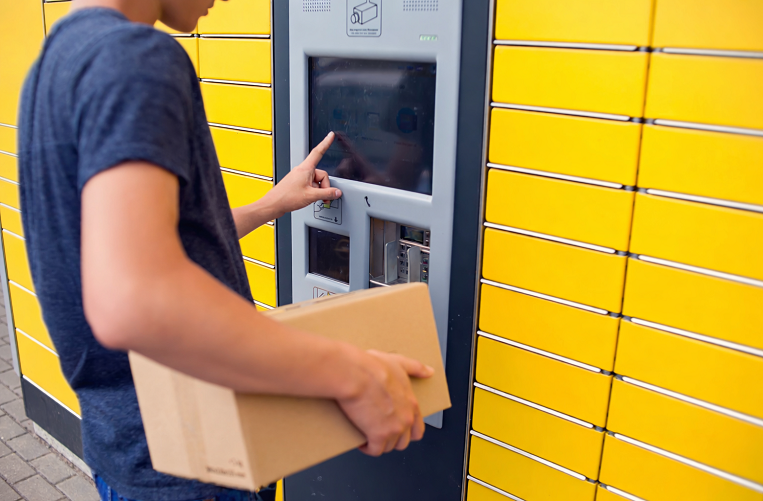
The concept is straightforward. A parcel locker is essentially a bank of individually locked compartments, placed in a convenient, high-traffic location. When a courier arrives, instead of knocking on doors or leaving packages unattended in a hallway, they place the parcel inside an empty compartment. The system then sends a notification to the recipient with a pickup code or a QR scan to open the correct locker and retrieve their package.
No missed deliveries. No lost parcels. No awkward conversations with a neighbor who's tired of holding onto packages for you.
Where Smart Parcel Lockers Make the Biggest Difference
Residential Communities
Residential communities are the most obvious location for a parcel locker system. Apartments and gated neighborhoods with multiple buildings often struggle the most with parcel delivery, simply because there's no single, reliable point of contact for couriers. A centralized locker bank at the main entrance or near the security booth solves the problem neatly — residents can pick up their parcels on the way home, at any hour, without waiting for a courier to show up during business hours or hoping a neighbor happens to be home.
Office Buildings and Business Districts
Office buildings and business districts are another natural fit. Employees order personal parcels to work almost as often as they receive business documents and supplies. A parcel locker in the lobby or near the lift area keeps deliveries organized and significantly reduces the workload on reception staff, who would otherwise be manually signing for, storing, and tracking down recipients for dozens of packages a day.
University Campuses
University campuses are also strong candidates. Students order textbooks, gadgets, and everyday essentials constantly, but delivery riders are usually not permitted inside dormitory buildings for security reasons. A set of parcel lockers at the main gate or near the student union gives students a reliable, secure way to receive packages without requiring couriers to navigate — or be granted access to — restricted campus areas.
Shopping Centers and Retail Spaces
Shopping centers and retail spaces are increasingly adopting parcel lockers too, often for more than one purpose. Some retailers use them for in-store pickup — customers order online and collect their items at the mall instead of waiting for home delivery. Others use them for returns, where shoppers drop off unwanted items into a locker and the store processes the return afterward. It's a flexible system that retailers are still actively exploring, with new use cases emerging as adoption grows.
What Separates a Good Parcel Locker From a Great One
Not all parcel lockers are built the same. The systems that actually perform well over years of daily use share a specific set of features — and the ones that cut corners on these tend to show it fast.
Durable, Weather-Resistant Construction
These lockers are used daily, sometimes dozens of times a day, in all kinds of weather. A well-built unit uses sturdy steel with a rust-resistant, powder-coated finish. It shouldn't dent easily, shouldn't rust in the rain, and shouldn't show visible wear after just a few months of heavy use — this is infrastructure, not a temporary fixture.
A Reliable, Modern Locking System
The locking system is just as important as the cabinet itself. Electronic locks with reliable hardware and secure access codes are now the standard. Some older installations still rely on physical keys, but digital access through QR codes, PINs, or RFID cards is far more common — and far more practical — in modern deployments. These systems are significantly harder to bypass, and they eliminate the recurring headache of lost or duplicated physical keys.
Software That Actually Works
The software layer matters just as much as the hardware. A smart parcel locker isn't much use if the interface is slow or the notification system doesn't fire reliably. The best systems send instant alerts to recipients via SMS, email, or a mobile app the moment a package is deposited. They also offer real management tools for property managers and building operators — usage reports, maintenance alerts, and the ability to remotely open compartments in an emergency without needing to be physically on-site.
Genuine Ease of Use
One of the biggest factors in whether a parcel locker system actually succeeds — or just becomes an ignored metal box in the corner — is how easy it is to use. Couriers should be able to deposit a package in a few taps on a screen, without a confusing multi-step process. Recipients shouldn't have to download an app or create an account unless they specifically want to. The entire process, from delivery to collection, should be quick and self-explanatory the very first time someone uses it.
Clear Signage
Good signage matters more than it might seem. If a locker bank is tucked away in a corner with no indication of where it is or how to use it, people will simply walk past it — including couriers unfamiliar with the property. A simple, visible sign at the entrance and clear on-screen instructions make the difference between a system that gets adopted quickly and one that sits underused for months.
A Supplier Who Stands Behind the Product
Property managers and facility owners want a system that stays reliable over the long term, not just during the first few months after installation. That means choosing a supplier who stands behind their equipment with replaceable components, responsive technical support, and a clear, straightforward warranty policy.
It also genuinely helps if the supplier has real experience with your local environment — climate conditions, network availability, and power stability all directly affect how reliably an electronic locker system performs over time, and a supplier without that context is more likely to deliver a system that struggles outside of ideal lab conditions.
Why This Matters More Every Year, Not Less
Online shopping isn't going away. More parcels are being shipped every year, and the pressure on last-mile delivery — the final, often most inefficient leg of getting a package from a warehouse to an actual front door — is only growing. Parcel lockers aren't a perfect solution for every situation, but they're a genuinely practical one that works well across a wide range of settings.
For residents, they offer convenience and peace of mind — no more missed deliveries or chasing down a neighbor
For couriers, they offer speed and efficiency — one drop-off point instead of dozens of individual doors
For property managers, they offer order and security — fewer packages piling up in lobbies, fewer disputes over "missing" deliveries
Everyone in the chain benefits, which is a big part of why adoption has grown so quickly across residential, commercial, and educational settings alike.
Frequently Asked Questions
How does a smart parcel locker notify the recipient?
Most systems send an instant notification via SMS, email, or a mobile app as soon as a courier deposits a package, along with a pickup code or QR code the recipient uses to open the correct compartment.
Do couriers need special access or an account to use a parcel locker?
Well-designed systems let couriers deposit a package in just a few taps on the locker's screen, without requiring an account or lengthy setup process, which is essential for keeping courier routes moving efficiently.
What makes a parcel locker system reliable long-term?
Durable, weather-resistant construction, a modern electronic locking system, dependable notification software, and a supplier that offers responsive support and a clear warranty policy are the main factors that determine whether a system holds up well over years of daily use.
Can parcel lockers be used for more than deliveries?
Yes. Beyond standard courier drop-offs, many retailers now use parcel lockers for in-store pickup of online orders and for processing customer returns, and some residential and office deployments extend the same lockers to internal mail and small package handling.
Conclusion
If your community or business is still handling parcel delivery the old-fashioned way — hallway packages, held-for-a-neighbor handoffs, or overwhelmed reception staff — it's worth taking a closer look at a smart parcel locker system. It's not a massive investment, and the return in terms of convenience, security, and reduced day-to-day headaches is considerable, for everyone involved.
Ready to bring a reliable smart parcel locker system to your property? Contact our team for a configuration suited to your building, campus, or retail space.
Contact Us
📞 Phone/WhatsApp: +86 132 1355 7186
📧 Email: sales@buysmartlocker.com
Our Contact
Minno Furtniture
Customize smart storage lockers,parcel delivery lockers, key management cabinet,Vending machines,Office/School and home furniture.
-
Call For Inquiry
-
Send Us Email
sales@buysmartlocker.com
Need Help For Project!
We are ready to help your next projects, let’s work together
 WhatsApp
 sales@buysmartlocker.com
 +8613213557186