

News
15
Oct
What Is a Vending Machine? How It Works, Key Components and Smart Features Explained
A vending machine is an automated, self-service machine that dispenses products such as snacks, drinks, coffee or other goods after the customer makes a selection and pays. Because it works without a cashier, an automatic vending machine can serve customers 24 hours a day in offices, schools, hospitals, shopping malls, stations and tourist sites. This guide explains how a vending machine works step by step, what each component does, how payment and dispensing systems differ, and what makes a modern smart vending machine different from a traditional one.
Table of Contents
What is a vending machine?
A short history of vending
How does a vending machine work?
Main components of a commercial vending machine
Dispensing mechanisms: spiral, belt, pusher and elevator
Payment systems: from coins to e-wallets
Temperature control and product safety
Smart vending machines: touchscreens, IoT and remote management
Security features
Where are vending machines used?
Frequently asked questions
1. What is a vending machine?
A vending machine, also called an automatic merchandising system, stores products inside a cabinet and releases them when a customer selects an item and completes payment. The machine replaces a human seller: it displays the products, accepts payment, delivers the item and, in modern versions, reports sales and stock data back to the owner.
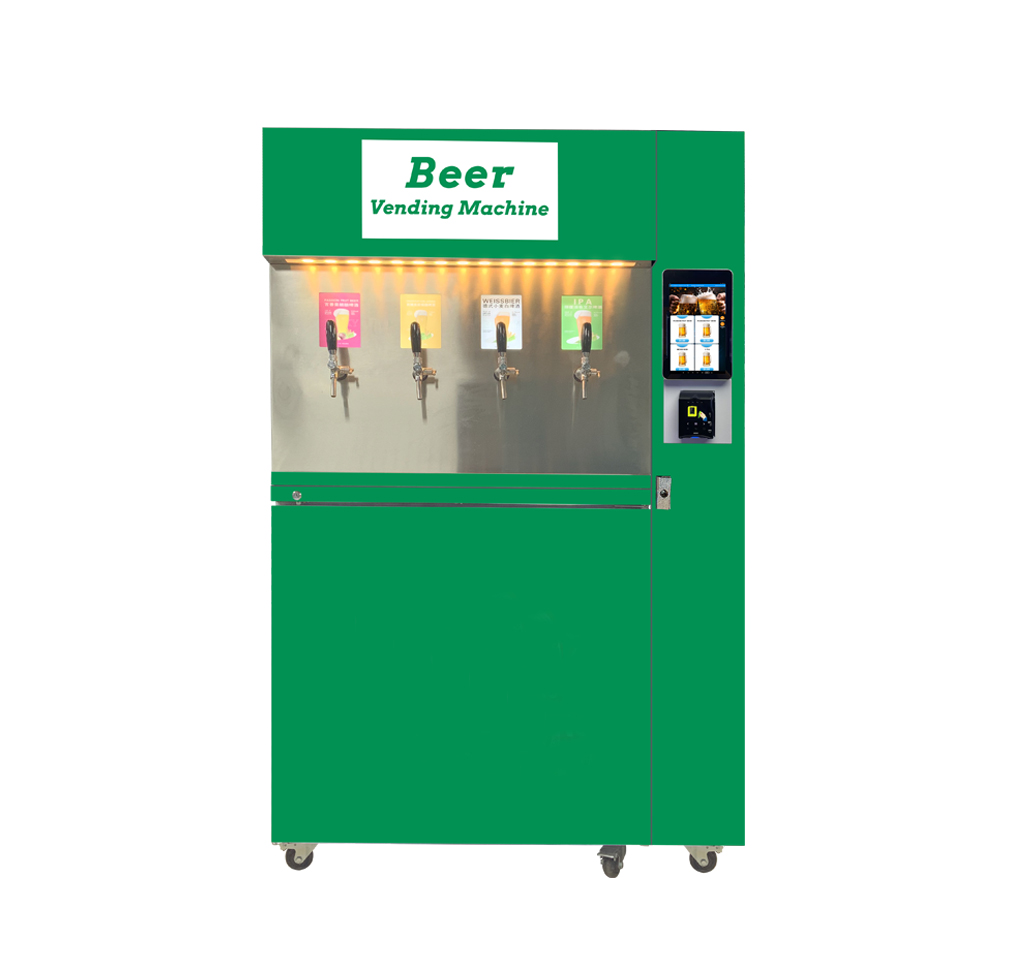
Vending machines are used to sell far more than candy bars. Today they dispense snacks, soft drinks, hot coffee, fresh food, cup noodles, personal protective equipment (PPE), cosmetics, electronics, souvenirs and even draft beer. Custom vending machines are configured so that the machine properly vends whatever product a business wants to sell.
2. A short history of vending
Self-service dispensing is not a new idea. Hero of Alexandria is commonly credited with describing a coin-operated device that dispensed holy water in ancient times. Commercial vending machines became widespread in the nineteenth and twentieth centuries, first selling postcards, gum and cigarettes, and later drinks and snacks. Over the last decade, touchscreens, cashless payment and internet connectivity have turned the simple coin-and-spiral machine into a smart retail terminal.
3. How does a vending machine work?
Whether it is a basic snack machine or a smart touchscreen unit, the process follows the same logic:
Selection. The customer chooses a product using buttons, a keypad or a touchscreen.
Price check. The control board checks the price and whether the product is in stock.
Payment. The customer pays by bill, coin, card, e-wallet or another accepted method.
Verification. The payment device confirms the amount and sends a signal to the controller.
Dispensing. The controller activates the dispensing mechanism (spiral, belt, pusher or elevator) for the selected item.
Delivery confirmation. A sensor confirms the product has dropped or been delivered. If not, the machine can retry or refund.
Data update. Stock and sales records are updated and, on connected machines, sent to the operator.
4. Main components of a commercial vending machine
| Component | Function |
|---|---|
| Cabinet | Steel body that holds products and protects the machine |
| Control board (mainboard) | Runs the software and coordinates all parts |
| User interface | Buttons, keypad or touchscreen for selection |
| Goods trays | Hold products and carry the dispensing mechanism |
| Dispensing motors | Rotate spirals, drive belts or move pushers and elevators |
| Payment devices | Bill acceptor, coin acceptor, card reader, QR or e-wallet module |
| Delivery detection sensor | Confirms items have been dispensed |
| Refrigeration or heating unit | Keeps drinks and perishable goods cold, or food warm |
| Door lock and security system | Prevents theft and unauthorized access |
| Connectivity module | WiFi, Ethernet or 4G for remote monitoring |
5. Dispensing mechanisms: spiral, belt, pusher and elevator
Different products need different delivery methods.
Spiral (coil) trays. A rotating metal spiral pushes the product forward until it drops. This is the most common design for bagged snacks, bottles and cans.
Belt (conveyor) trays. A belt moves items forward, suited to boxed or irregular items that do not fit spirals.
Direct pusher. A pusher shoves the product off the tray, often used for flat or fragile items.
Elevator (XY lift). A platform picks the product from its position and carries it to the delivery outlet. This suits fragile goods such as cakes, because the item is lowered gently rather than dropped. Elevator machines can pick from the middle of the cabinet.
Locker-style compartments. Each product or order sits in its own compartment that unlocks when the customer pays or enters a code, which suits large or valuable items.
6. Payment systems: from coins to e-wallets
Modern vending machines can support several payment methods at once, including:
Bills and coins
Bank cards
E-wallets and mobile payments
IC cards and ID cards (useful for employee or campus systems)
Cashless vending machines are increasingly popular because customers carry less cash, operators handle less cash and sales are recorded automatically. Many machines also use standard communication protocols so that different payment devices can be connected to the same controller.
7. Temperature control and product safety
Machines selling drinks or perishable food need temperature control. Refrigerated vending machines keep beverages and fresh items cold, and on smart machines the temperature can be adjusted remotely so products remain fresh. Some machines have no cooling system at all, which makes them suitable for dry goods and lowers the cost.
Heated compartments can keep hot food or meals warm, and hot-water machines are used for products such as cup noodles.
8. Smart vending machines: touchscreens, IoT and remote management
A smart vending machine adds software and connectivity to the basic hardware. Typical features include:
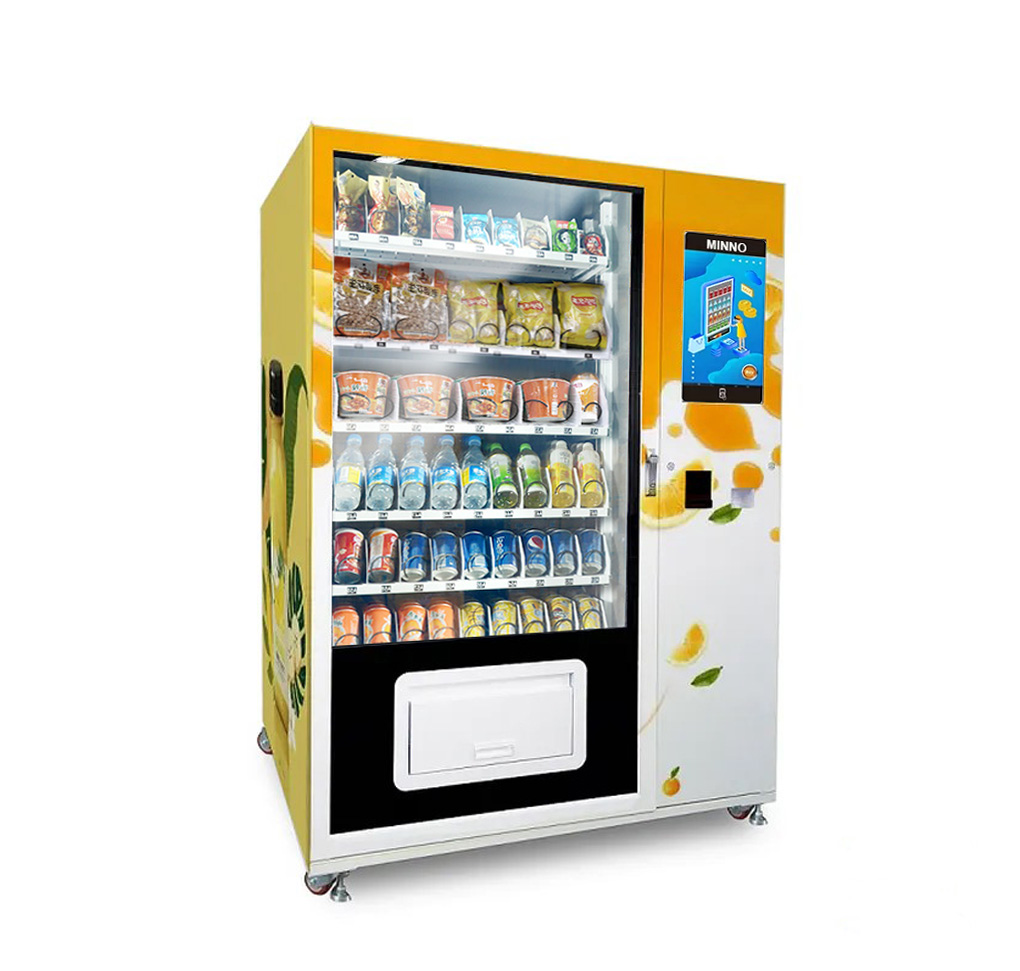
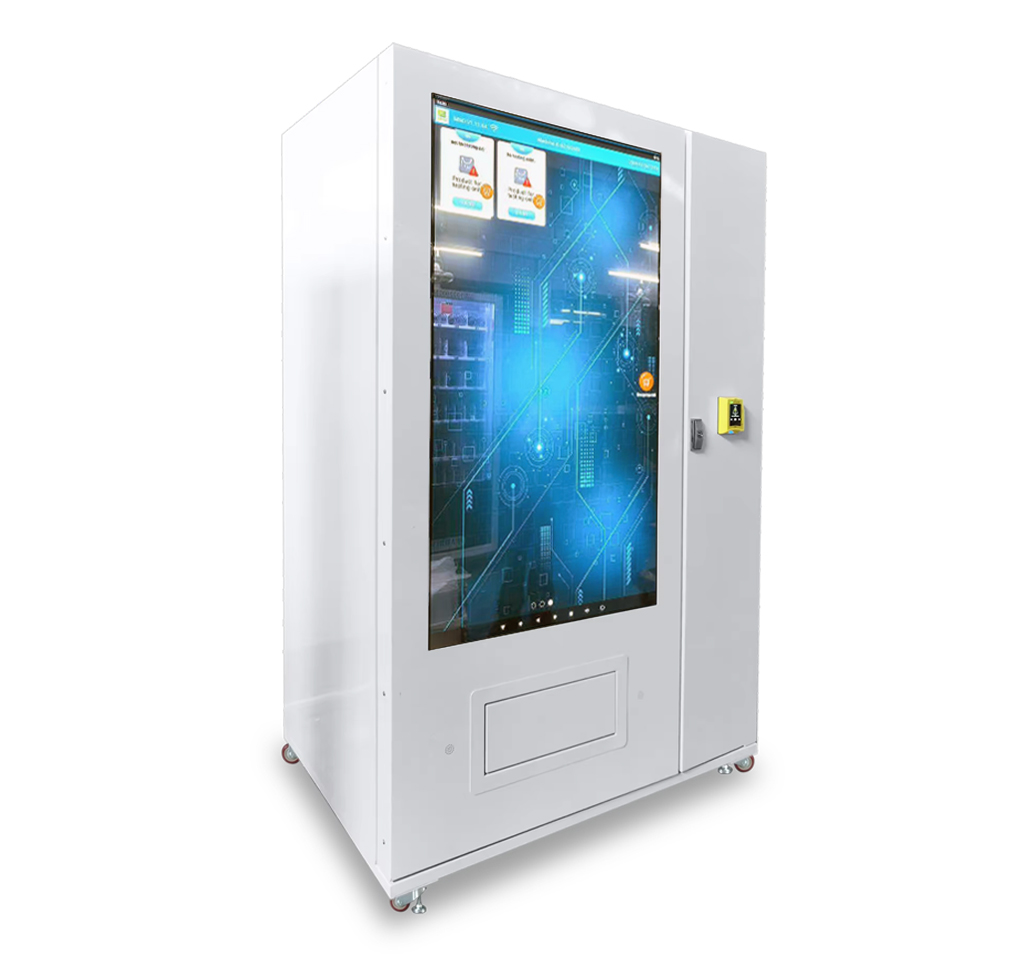
Touchscreen and interactive display. Large screens show products, prices and promotions. Screens of 22 inches or 55 inches can play picture and video advertisements, and businesses can upload their own logo and service number.
Remote diagnostics and monitoring. Operators can check real-time inventory and real-time sales data from anywhere, and can remotely turn lights and screens on or off.
Remote temperature adjustment. Useful for refrigerated machines.
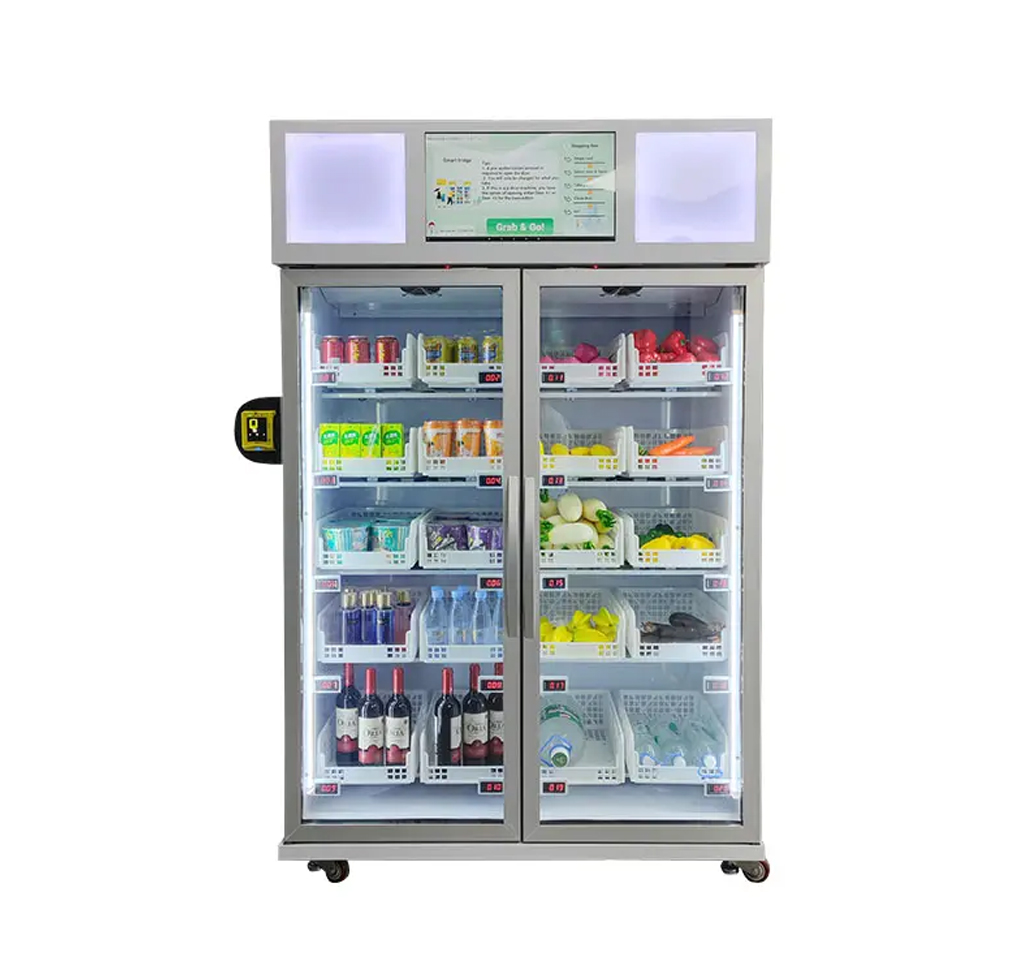
Weight-sensing technology. In smart fridge vending machines, weight sensors detect which items a customer takes, enabling a "grab and go" experience with card-based access.
AI and conversion kits. Existing fridges can be converted into vending machines using a kit with a card reader.
These capabilities reduce unnecessary service visits, help operators restock precisely and give businesses data to understand what sells.
9. Security features
Because vending machines hold goods and sometimes cash, security is built into the design:
Anti-theft mechanisms and strong locks
Secure cash collection systems
Surveillance systems and cameras
Software alerts when the door is opened or a fault occurs
10. Where are vending machines used?
Retail: shopping malls and stores for snacks, drinks and quick essentials
Public places: airports, train stations and bus stations
Offices and workplaces: snacks, drinks, coffee and office supplies
Healthcare: hospitals and clinics for food, drinks and hygiene products
Education: schools and universities
Tourist locations: theme parks, landmarks and tourist sites
Industrial sites: PPE and tool dispensing for employees
A key advantage everywhere is 24/7 availability, since customers can buy outside normal opening hours.
11. Frequently asked questions
What is a vending machine in simple words?
It is a machine that sells products automatically. You choose an item, pay, and the machine delivers it without a salesperson.
How does a vending machine know what I selected?
The keypad or touchscreen sends your selection to the control board, which activates the matching tray and dispensing motor.
What is a smart vending machine?
A smart vending machine has a touchscreen, cashless payment and internet connectivity. It lets the operator monitor stock and sales remotely, update advertising and adjust settings without visiting the machine.
Can a vending machine accept cards and mobile payments?
Yes. Modern machines can be fitted with card readers, e-wallet modules and IC or ID card readers, alongside bill and coin acceptors.
Can vending machines sell products other than snacks?
Yes. Vending machines can be customized to sell cosmetics, blankets, hot sauce, PPE, cup noodles, coffee, beer and many other goods.
Talk to a vending machine manufacturer
MINNO is a professional vending machine and smart locker manufacturer that accepts OEM and ODM orders. Browse our vending machine range, including snack and drink vending machines, coffee vending machines and smart fridge vending machines.
Email: sales@buysmartlocker.comWhatsApp / Phone: +86 132 1355 7186
Our Contact
Minno Furtniture
Customize smart storage lockers,parcel delivery lockers, key management cabinet,Vending machines,Office/School and home furniture.
-
Call For Inquiry
-
Send Us Email
sales@buysmartlocker.com
Need Help For Project!
We are ready to help your next projects, let’s work together
 WhatsApp
 sales@buysmartlocker.com
 +8613213557186