

News
12
Aug
7 Vending Machine Investment Myths That Are Costing You Money (And What's Actually True)
Search "vending machine business" and you'll find a lot of confident claims about effortless passive income. Some of it is true. A lot of it skips the details that actually determine whether a machine makes money or quietly bleeds it. Before you buy your first unit, it's worth separating the myths from the reality — because the operators who succeed usually aren't the ones who believed the easiest version of the pitch.
Myth #1: "Any Location Will Work — Just Get the Machine There"
The myth: People need snacks and drinks everywhere, so placement barely matters — just find any spot with some foot traffic and start collecting revenue.
The reality: Placement is the single biggest factor in whether a vending machine succeeds or sits there losing money. A hallway with occasional foot traffic is not the same as a break room people pass through five times a day. The strongest locations share specific traits — consistent daily traffic, a genuine gap in nearby food or drink options, and a captive audience with limited alternatives (think: gyms, factories, hospitals, transit hubs). A machine dropped into a low-traffic spot because "it was available" is one of the most common reasons new operators underperform.
Myth #2: "It's Completely Passive — You Barely Have to Show Up"
The myth: Once the machine is installed, income just rolls in with almost no ongoing effort.
The reality: Vending is lower-effort than a staffed retail store, not effort-free. Machines still need restocking, occasional cleaning, and periodic servicing — and the frequency depends entirely on your sales volume and product mix. What's genuinely changed is how much of that effort has been reduced by technology: remote monitoring means you're not driving to a machine just to check if it needs restocking, and sales data tells you what to bring instead of guessing. It's a leaner business than a storefront — but it still requires active management, especially as you scale beyond one or two machines.
Myth #3: "More Product Variety Always Means More Sales"
The myth: The more snacks, drinks, and categories you cram into a machine, the more customers you'll attract.
The reality: A machine loaded with 40 slow-moving products often underperforms one stocked with 15 items that actually sell in that specific location. An office break room and a gym lobby have completely different demand patterns — the gym crowd wants protein bars and electrolyte drinks, not candy bars. Sales data from your specific machine and location should drive your product mix, not a generic "more is better" instinct. Product variety matters, but relevant variety matters far more than sheer volume.
Myth #4: "Cash-Only Machines Are Fine — People Still Carry Cash"
The myth: A basic coin-and-bill machine covers most of your potential customers.
The reality: A meaningful share of purchases are lost the moment a customer reaches for their phone or card and realizes the machine doesn't accept it — they simply walk away rather than dig for cash. Cashless and mobile payment support isn't a premium add-on anymore; it's close to a baseline expectation, especially in offices, gyms, and transit locations where tap-to-pay habits are now the norm. Sticking with a cash-only setup in 2026 isn't a cost-saving decision — it's a lost-sales decision.
Myth #5: "One Machine Will Make You Rich Fast"
The myth: A single well-placed vending machine can quickly replace a full-time income.
The reality: A single machine, even in a great location, generates modest, steady revenue — not a windfall. The real financial upside in vending comes from scaling a route: reinvesting profits from your first machine into a second, then a third, and building a portfolio of machines across multiple strong locations. Operators who treat vending as a get-rich-quick scheme with one unit are usually disappointed. Operators who treat it as a slow, compounding business — reinvest, expand, repeat — are the ones who eventually build something substantial.
Myth #6: "Once It's Installed, the Location Is Locked In Forever"
The myth: If you sign an agreement with a property manager or business owner, that's your spot indefinitely — no need to keep evaluating it.
The reality: Foot traffic patterns change. A location that performed well when it opened can quietly decline — a company downsizes, a competing vendor moves in nearby, or a building's layout changes and cuts off natural traffic flow. Successful operators regularly review sales data across their route and aren't afraid to relocate an underperforming machine rather than leaving it in a declining spot out of habit. Flexibility, not permanence, is what protects your revenue over time.
Myth #7: "All Vending Machines Are Basically the Same"
The myth: A vending machine is a vending machine — the specific model doesn't matter much as long as it dispenses product.
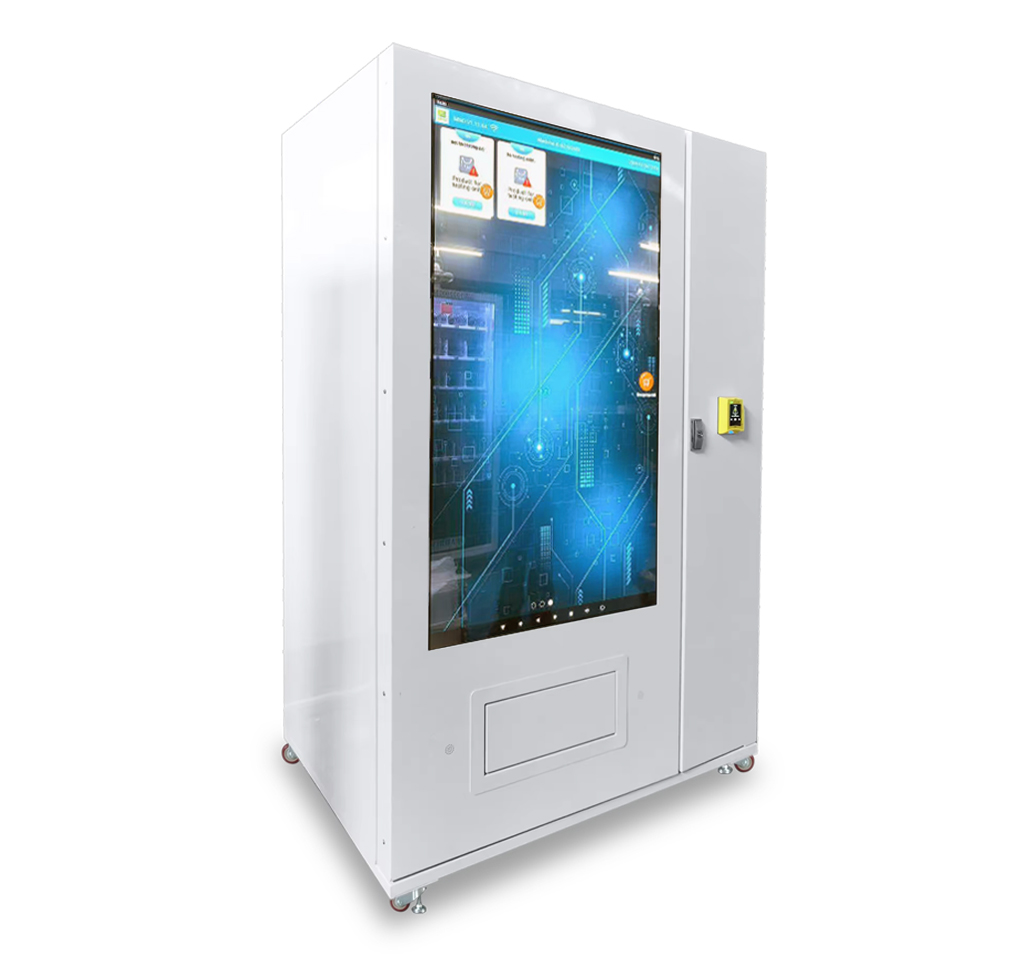
The reality: The gap between a basic mechanical dispenser and a modern smart vending machine is significant. Features like remote inventory monitoring, cashless payment integration, sales analytics, and (for categories like coffee) AI-assisted preparation systems directly affect both revenue and how much manual effort the machine requires from you. A cheaper, feature-poor machine can end up costing more over time in lost sales and unnecessary site visits than a better-equipped unit would have cost upfront.
What Actually Determines Vending Machine Success
Strip away the myths, and the real formula is fairly consistent across successful operators:
Location quality over location convenience — choose based on foot traffic and unmet demand, not just what's easiest to access
Active, data-informed management — even a low-effort business still benefits from periodically reviewing what's selling and adjusting accordingly
Modern payment and monitoring technology — reduces lost sales and unnecessary site visits
Gradual, reinvestment-driven scaling — one machine builds the case study; the real revenue comes from the route you build afterward
Frequently Asked Questions
Is a vending machine business actually passive income?
It's lower-effort than a staffed business, but not fully passive — restocking, occasional servicing, and reviewing sales data are still part of running it well, especially as you add more machines.
How many vending machines do I need to make good money?
There's no fixed number, but most successful operators build up from a single machine to a small route over time, since the strongest financial results come from scaling across several well-placed machines rather than relying on one unit.
What's the biggest mistake new vending machine operators make?
Underestimating how much placement matters. A well-equipped machine in a weak location will consistently underperform a simpler machine in a location with genuine, consistent demand.
Do I need a cashless payment system on my vending machine?
It's strongly recommended. A growing share of potential customers won't purchase from a cash-only machine at all, so cashless and mobile payment support directly protects sales you'd otherwise lose.
Conclusion
Vending machines can absolutely be a smart, scalable investment — but not because they're magic. The operators who do well are the ones who treat placement, product mix, technology, and route management as ongoing decisions, not a one-time setup. Skip the myths, get the fundamentals right, and vending remains one of the more accessible paths to building steady business revenue.
Ready to start or grow your vending machine route the right way? Contact our team to find the right machine — snack, drink, coffee, food, or specialty — for your specific location and goals.
Contact Us
📞 Phone/WhatsApp: +86 132 1355 7186
📧 Email: sales@buysmartlocker.com
Our Contact
Minno Furtniture
Customize smart storage lockers,parcel delivery lockers, key management cabinet,Vending machines,Office/School and home furniture.
-
Call For Inquiry
-
Send Us Email
sales@buysmartlocker.com
Need Help For Project!
We are ready to help your next projects, let’s work together
 WhatsApp
 sales@buysmartlocker.com
 +8613213557186