

Introduction: Why “Who Has the Key?” Is a Bigger Problem Than It Looks
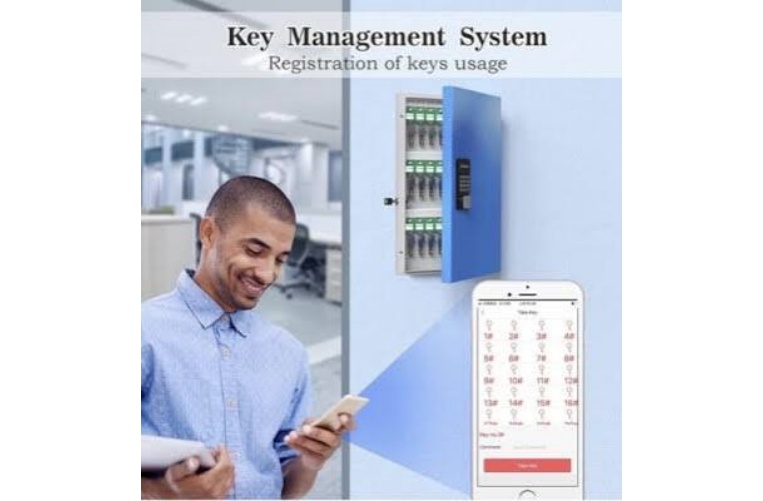
Every organization that manages more than a handful of keys eventually runs into the same question: who currently has this key, when did they take it, and when is it coming back? A simple key box on the wall can’t answer that. A floor standing smart key management cabinet can — automatically, with a full audit trail, and without a security guard manually logging a clipboard.
Below are eight industries where a smart key cabinet isn’t a nice-to-have — it’s quickly becoming the standard.
1. Fleet Management and Vehicle Depots
Any operation managing a fleet of company vehicles knows how easily a set of keys can go missing, get taken home by mistake, or be handed to the wrong driver.
A floor standing key management cabinet with card, fingerprint, or face recognition access lets fleet managers restrict which employees can withdraw which vehicle key
Every key withdrawal and return is logged automatically — no more guessing which driver had the van last Tuesday
This directly reduces key loss, unauthorized vehicle use, and the administrative time spent chasing down missing keys
2. University and Campus Security
Universities manage keys for hundreds of classrooms, labs, dormitories, and administrative offices — often across multiple buildings and shift-based security staff.
A centralized electronic key cabinet lets campus security assign specific key access to specific staff roles (facilities, RAs, professors, contractors)
Real-time alerts flag overdue keys or after-hours withdrawal attempts, which matters for lab and dormitory security in particular
Multiple cabinets across campus buildings can be managed from a single software platform over LAN, simplifying oversight for a large security team
3. Automotive Dealerships and Rental Agencies
Dealerships and car rental companies routinely manage dozens to hundreds of vehicle keys at once, and a lost or misused key can mean a stolen vehicle or a liability headache.
A 100-key smart cabinet gives dealerships a single secure point for all vehicle keys, with full traceability of who accessed which key and when
Multi-factor authentication (card plus fingerprint, for example) prevents an employee from checking out a key using someone else’s credentials
Detailed logs are useful for insurance, liability, and internal accountability in the event of a dispute
4. Public Utilities: Power, Water, and Gas Companies
Utility companies manage keys to equipment rooms, valve chambers, and power distribution rooms — spaces where unauthorized access can be a genuine safety hazard.
A smart key cabinet enforces strict access permissions, ensuring only certified or authorized technicians can withdraw keys to sensitive infrastructure
Overdue-key alerts help utility managers know immediately if a technician hasn’t returned a key after completing maintenance, which matters for both security and compliance reporting
5. Real Estate and Property Management
Property managers overseeing residential complexes, office buildings, or shopping malls typically juggle common-area keys for dozens of stakeholders — maintenance staff, cleaning contractors, security, and vendors.
A floor standing key management cabinet centralizes access to common-area keys (mechanical rooms, roof access, storage areas) without relying on a front-desk logbook
Contractors and temporary staff can be granted time-limited access, automatically expiring after their job is complete
6. Banking and Financial Institutions
Banks manage some of the most sensitive keys in any organization — vault access, ATM service rooms, and back-office areas.
Multi-person authorization settings allow high-security keys (like vault access) to require two or more authorized staff members present before release
A complete, tamper-proof audit trail supports internal compliance and security audits, which is often a regulatory requirement in the financial sector
7. Enterprises, Data Centers, and Labs
Any enterprise with server rooms, data centers, R&D labs, or high-value equipment storage has a genuine need for controlled key access.
Restricting access by role means only authorized IT staff can retrieve server room keys, with a permanent digital record of every access event
For 24/7 operations, remote monitoring lets facility managers check key status without physically walking to the cabinet
8. Government Agencies and Hotels
Government agencies use smart key cabinets to manage access to archive rooms, confidential file storage, and secure offices, where an auditable chain of custody is often a compliance necessity
Hotels and apartment complexes use them to supplement existing smart access systems or manage back-of-house key access for maintenance and housekeeping staff, particularly where hundreds of physical keys still need to be tracked alongside digital room access systems
What to Look for in a Floor Standing Smart Key Cabinet
Across all of these industries, a few features consistently matter most:
Flexible key slot capacity — commonly available in 30/40/50/60/70/80/90/100-key configurations, so the cabinet can be sized to the actual number of keys your organization manages
Multi-factor authentication — card, fingerprint, face recognition, and password options, often combinable for higher-security applications
Real-time monitoring and alerts — sensor-equipped key hooks that flag unauthorized access, forced entry, or overdue keys via sound, light, SMS, or email
Centralized software management — the ability to manage multiple cabinets across a site or campus from one platform via LAN/WAN
Durable, tamper-resistant construction — high-strength steel with anti-pry and anti-drill design, plus a mechanical override lock for emergency access
Frequently Asked Questions
What is a floor standing smart key management cabinet used for?
It’s used to securely store, track, and control access to physical keys across organizations that manage a large number of keys — commonly fleet operations, campuses, dealerships, utilities, property management, banks, and government agencies.
How many keys can a smart key cabinet hold?
Floor standing units are typically available in configurations ranging from 30 to 100 key slots, allowing organizations to choose a cabinet sized to their actual key inventory rather than over- or under-buying capacity.
What access methods do smart key cabinets support?
Most systems support card access, fingerprint recognition, face recognition, and password entry, either individually or combined for multi-factor authentication on higher-security keys.
Can one platform manage multiple key cabinets across different locations?
Yes — systems with LAN/WAN connectivity allow multiple cabinets across a building, campus, or site to be managed and monitored from a single centralized software platform.
Conclusion
Whichever industry you’re in, the underlying problem is the same: physical keys are hard to track with a manual system, and the cost of a lost or misused key — whether it’s a company vehicle, a server room, or a bank vault — is rarely trivial. A floor standing smart key management cabinet replaces the clipboard and the honor system with a fully logged, permission-based, auditable process.
Need a key cabinet sized and configured for your specific operation? Contact our team for a custom quote on key slot capacity, access method, and branding.
Contact Us
📞 Phone/WhatsApp: +86 132 1355 7186
📧 Email: sales@buysmartlocker.com
 WhatsApp
 sales@buysmartlocker.com
 +8613213557186