

Introduction: The Hidden Cost of “It’s Just a Key Box”
A wall-mounted key box with a padlock and a sign-out sheet feels like the cheapest possible way to manage keys. On paper, it is — no software, no touchscreen, no upfront hardware investment. But that low sticker price hides a set of ongoing costs that most organizations only notice after a key goes missing, a sign-out sheet gets falsified, or an audit turns up gaps nobody can explain.
This article compares traditional key boxes against electronic key management cabinets across the categories that actually determine long-term cost: labor, security, accountability, and risk.
1. Security: Padlock vs. Multi-Factor Access Control
Traditional key box: Security is only as strong as the padlock and whoever’s holding the physical key to the box itself. Anyone with access to that one key can open the entire box — there’s no way to restrict individual users to individual keys.
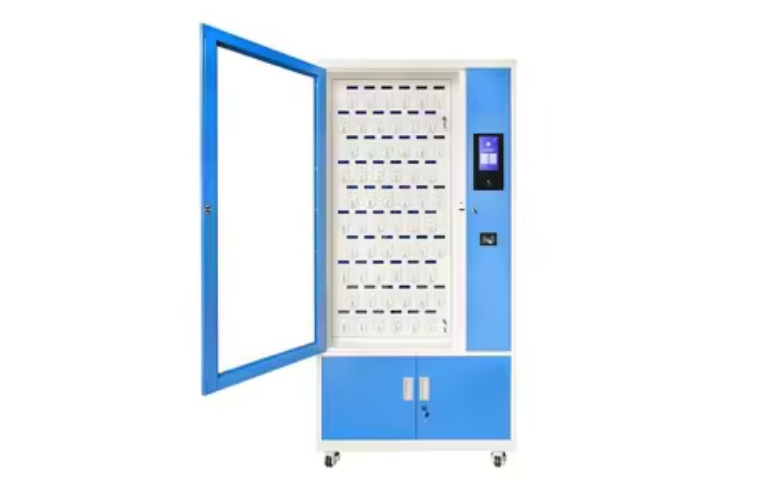
Electronic key cabinet: Access is controlled per user, per key, using card, fingerprint, face recognition, or password authentication — often combined for high-security keys. A staff member can only withdraw the specific keys they’re authorized for, and the system can require multi-person authorization for particularly sensitive keys, such as vault or server room access.
Bottom line: A traditional key box protects against outsiders. An electronic key cabinet also protects against insiders — which is where most key-related incidents actually originate.
2. Accountability: Sign-Out Sheets vs. Automatic Audit Trails
Traditional key box: Relies on a paper sign-out sheet or a logbook — both of which depend entirely on staff honesty and consistency. Sheets get skipped, handwriting is illegible, and there’s no way to verify a sign-out actually happened at the time claimed.
Electronic key cabinet: Every withdrawal and return is logged automatically with the user’s identity, exact timestamp, and which specific key was taken — no manual entry required. This creates a tamper-proof audit trail that’s ready for compliance reviews or incident investigations without anyone digging through paper records.
Bottom line: When something goes wrong — a missing key, an unauthorized area accessed — the electronic system can answer “who and when” in seconds. A paper log often can’t answer it at all.
3. Labor Cost: Manual Oversight vs. Automated Monitoring
Traditional key box: Often requires a staff member — a security guard, front desk employee, or facilities manager — to physically manage sign-outs, chase down overdue keys, and reconcile the logbook periodically. This is recurring labor cost that scales with the number of keys and users.
Electronic key cabinet: Sensor-equipped key hooks automatically detect when a key is “in” or “out,” and the system sends real-time alerts for overdue keys, forced entry, or unauthorized access attempts — via sound, light, SMS, or email. No one needs to manually track down who still has a key.
Bottom line: The labor savings compound over time. An organization managing dozens or hundreds of keys can eliminate a meaningful chunk of manual administrative work that a traditional key box requires indefinitely.
4. Scalability: One Box vs. Centralized Multi-Cabinet Management
Traditional key box: Each additional location needs its own separate box, its own separate log, and no unified way to see what’s happening across sites.
Electronic key cabinet: Systems with LAN/WAN connectivity allow multiple cabinets — across a building, campus, or multi-site operation — to be managed and monitored from a single centralized software platform. Permissions, reports, and real-time status can all be reviewed from one place.
Bottom line: For any organization managing more than one location, this is where the cost gap widens fastest — traditional key boxes don’t scale, electronic systems do.
5. Upfront Cost vs. Total Cost of Ownership
It’s true that a traditional key box has a lower purchase price. But total cost of ownership tells a different story once you factor in:
Ongoing staff time spent managing sign-outs and chasing overdue keys
The cost of a lost key — replacement locks, re-keying, or in high-security environments, a full security review
The cost of an unaccounted-for key incident (unauthorized vehicle use, unauthorized facility access) that a paper system simply can’t prevent or even detect in real time
Compliance and audit prep time, which is dramatically faster with an automatic digital log than with paper records
For organizations managing a small handful of low-risk keys, a traditional box may genuinely be the more economical choice. For organizations managing dozens to hundreds of keys — particularly vehicle fleets, facility access, or anything tied to safety or compliance — the math tends to favor an electronic key management cabinet fairly quickly.
Frequently Asked Questions
Is an electronic key cabinet worth it for a small business? It depends on the number of keys and the risk associated with losing one. If you’re managing a handful of low-risk keys, a traditional key box may be sufficient. Once you’re managing dozens of keys, multiple staff members, or anything safety- or compliance-sensitive, the automated tracking and audit trail of an electronic cabinet usually pays for itself in reduced labor and risk.
What happens if the power goes out on an electronic key cabinet? Quality smart key cabinets include a high-security mechanical override lock specifically for emergency access, so keys remain retrievable even during a power interruption.
Can an electronic key cabinet integrate with existing security systems? Many systems support LAN/WAN connectivity and centralized management software, which allows integration into a broader security or facilities management workflow, including remote monitoring across multiple cabinets or sites.
How long does it take to see ROI from switching to an electronic key cabinet? This varies by organization, but the most common drivers of fast ROI are reduced administrative labor (no manual sign-out tracking), fewer lost-key incidents, and faster audit and compliance reporting. Organizations with high key volume or multiple locations typically see the return fastest.
Conclusion
A traditional key box is cheaper to buy. An electronic key management cabinet is cheaper to run — once you account for labor, security incidents, and the real cost of not knowing who has a key at any given moment. For any organization where a missing key carries real consequences, the traditional key box’s low upfront price tag is often the most expensive part of the decision.
Want to calculate what a smart key cabinet would look like for your specific key volume and use case? Contact our team for a configuration and quote tailored to your operation.
Contact Us
📞 Phone/WhatsApp: +86 132 1355 7186
📧 Email: sales@buysmartlocker.com
 WhatsApp
 sales@buysmartlocker.com
 +8613213557186