

News
31
Aug
How to Choose the Right Smart Vending Machine for Your Business (2026 Buyer's Guide) | Minno
Buying a vending machine used to be a simple decision: pick a size, pick a coil count, done. Today, with the rise of smart vending machines, gravity-sensing refrigerated vending machines, and connected IoT vending technology, choosing the right equipment can directly determine how profitable — and how much of a headache — your vending business becomes.
If you've already read our guide on how gravity-sensing vending machines work, you know that modern vending hardware is about far more than just dispensing a product. In this guide, we'll walk through exactly how to evaluate a smart vending machine for your business, so you invest in the right equipment the first time.
Step 1: Define Your Product Mix First
Before comparing machines, get clear on what you actually plan to sell, because this determines the machine category you need:
Beverage-only vending machines — bottles, cans, cold drinks
Snack vending machines — packaged snacks, chips, candy
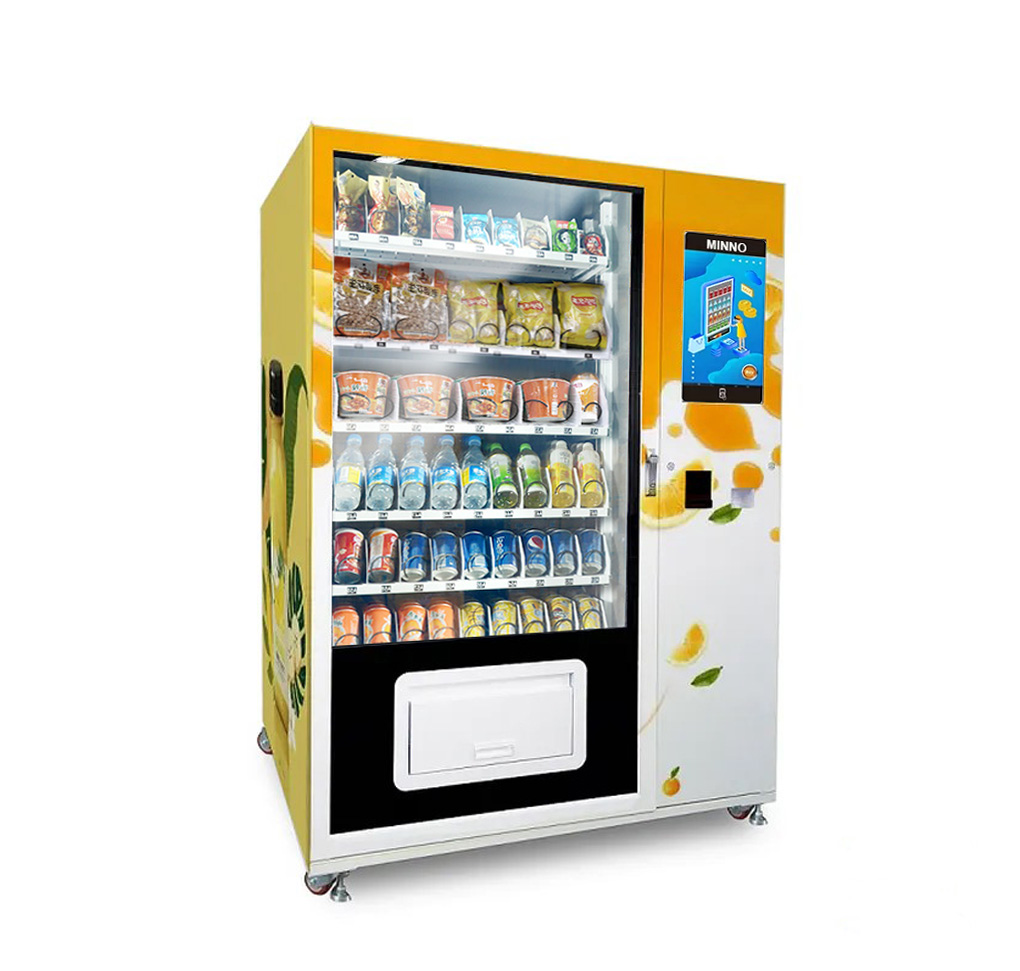
Combo vending machines — snacks and drinks in one unit, ideal for offices and breakrooms
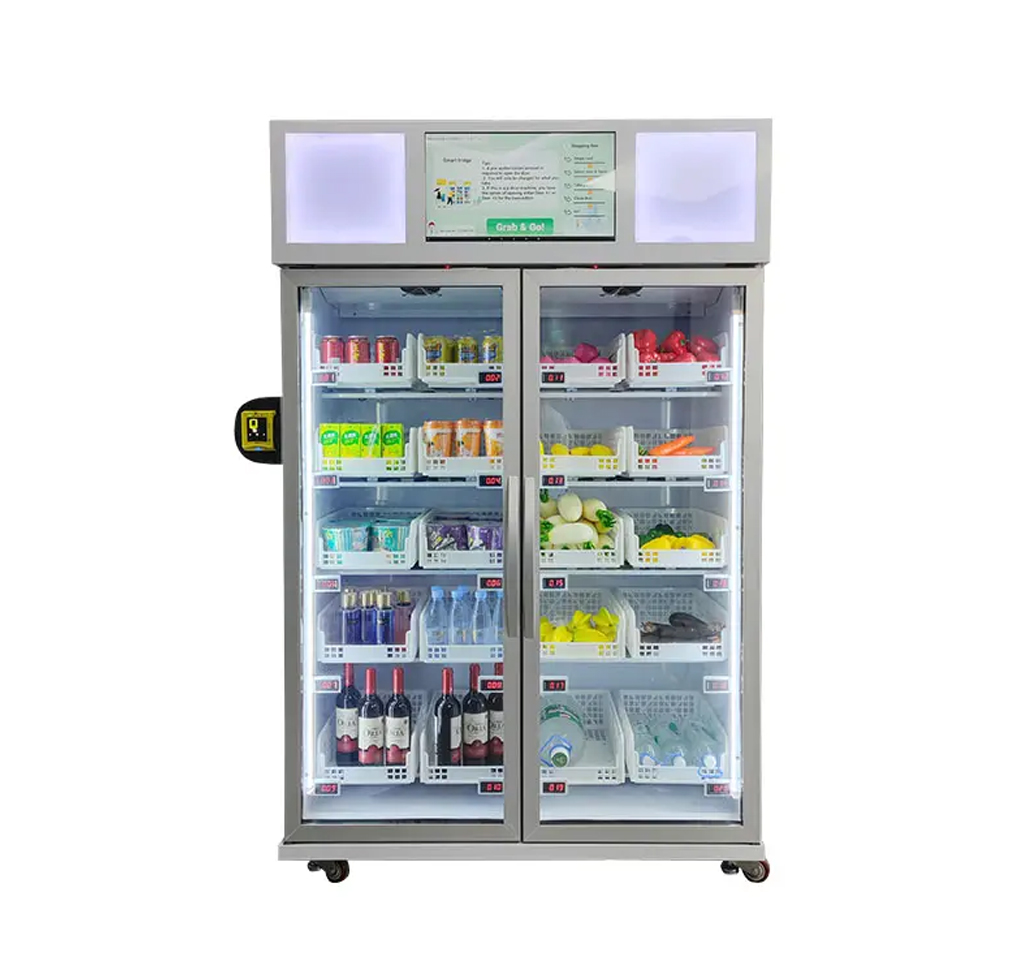
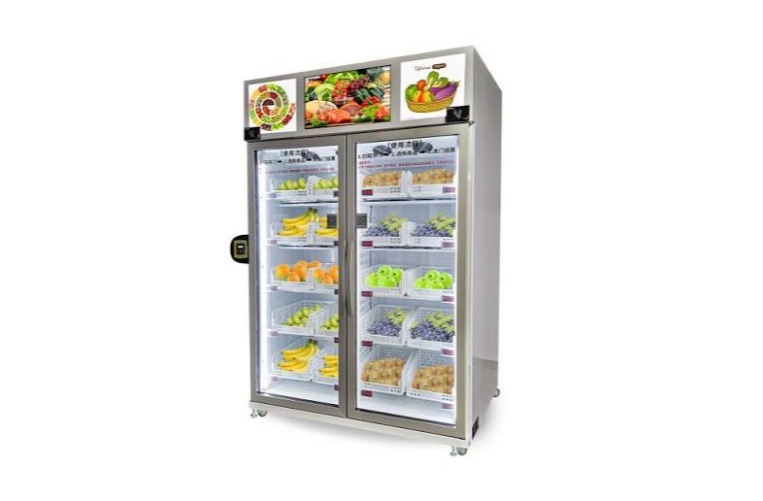
Fresh food vending machines — sandwiches, salads, yogurt, dairy, and other perishables requiring refrigeration
Frozen food vending machines — ice cream, frozen meals
Many operators today are moving toward combo vending machines and fresh food vending machines because they capture more sales per location and meet growing demand for healthier, fresher options — but they also require more sophisticated refrigeration and inventory technology than a basic snack machine.
Step 2: Decide Whether You Need Gravity-Sensing Technology
If any part of your product mix includes refrigerated or perishable items, a gravity-sensing vending machine is worth serious consideration. As we covered in our gravity-sensing technology guide, tilted shelves and precision sensors mean:
Fewer jams and mechanical failures than spiral-coil machines
Real-time inventory accuracy for perishable stock
Lower long-term maintenance costs
For beverage- or snack-only locations with lower turnover, a standard mechanical vending machine may still be sufficient. But for high-traffic locations — gyms, hospitals, offices, campuses — the reliability and inventory accuracy of gravity-sensing shelves quickly pays for itself.
Step 3: Evaluate Remote Monitoring and IoT Capabilities
One of the biggest shifts in the vending industry is the move from "check it when you visit" to real-time remote vending machine monitoring. When comparing smart vending machines, ask:
Does the machine report live inventory levels to a cloud dashboard?
Will it alert you automatically to low stock, door-open events, or temperature issues?
Can you monitor an entire fleet of machines from a single platform?
Does the system provide sales analytics by product, location, and time of day?
These features are what separate a truly "smart" vending machine from a machine that simply has a screen and a card reader bolted on. Remote monitoring is also what makes gravity-sensing inventory data actually useful — the sensors are only valuable if that data reaches you in real time.
Step 4: Check Refrigeration Performance and Energy Efficiency
For any refrigerated vending machine, cooling performance directly affects both food safety and operating costs. Look for:
Consistent, food-safe internal temperatures, even in warm ambient environments
Energy-efficient compressors to control electricity costs, especially for 24/7 operation
Well-insulated cabinets that reduce compressor cycling
A poorly insulated or inefficient refrigerated vending machine can quietly erode your margins through both energy costs and spoiled inventory.
Step 5: Consider Payment Flexibility
Modern vending customers expect frictionless payment. Confirm the machine supports:
Cashless and mobile payment options
Card readers
Integration with your existing payment or fleet management systems
Step 6: Think About Total Cost of Ownership, Not Just Sticker Price
A smart gravity-sensing vending machine typically costs more upfront than a basic mechanical unit. But the right way to evaluate cost is over the machine's operating life, factoring in:
Reduced service trips from remote monitoring
Fewer repairs from simplified, low-part-count mechanisms
Less spoilage from accurate, real-time inventory tracking
Higher uptime and fewer lost sales from stockouts or breakdowns
Operators who compare only the purchase price often underestimate how much smart technology saves over two, three, or five years of operation.
How Minno Helps You Choose the Right Machine
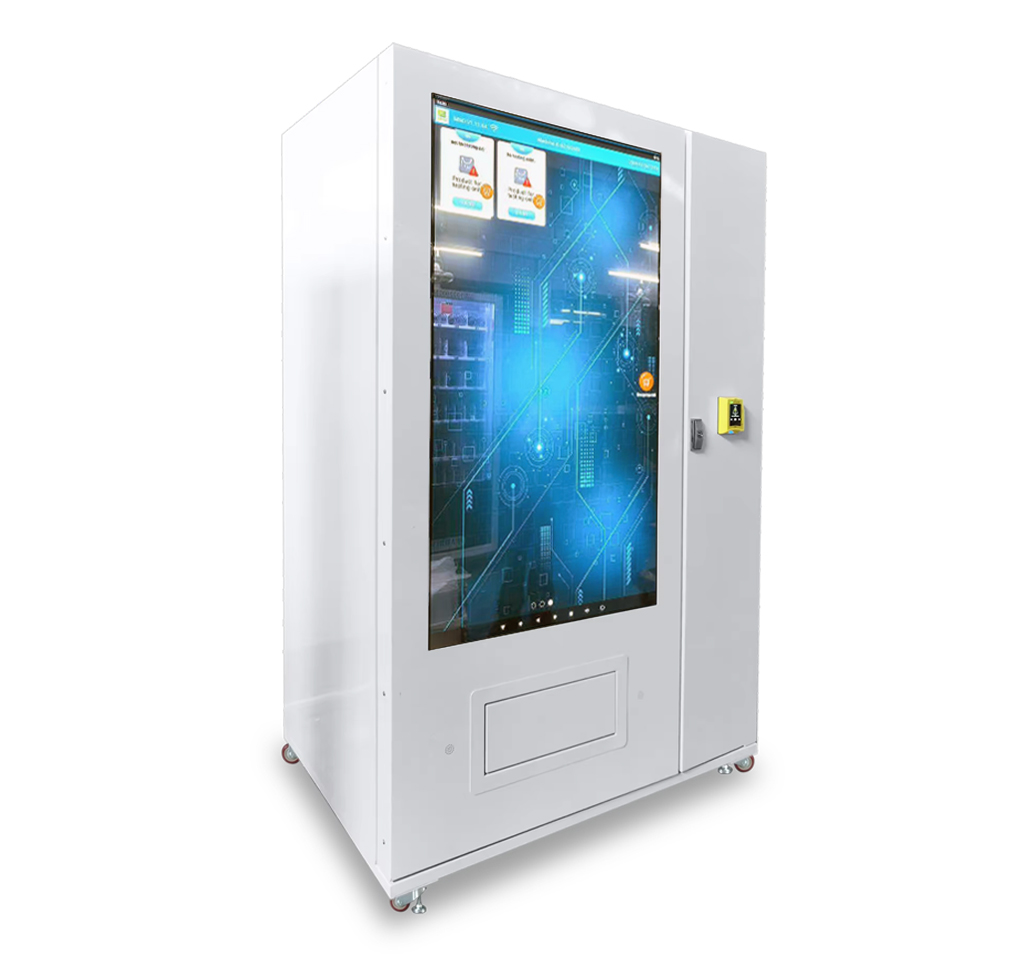
At Minno, we manufacture a full range of smart vending equipment — from combo vending machines to gravity-sensing refrigerated fresh food vending machines — and we work directly with operators to match equipment to their specific locations, product mix, and growth plans. Rather than selling a one-size-fits-all machine, our team helps you evaluate:
Expected foot traffic and turnover at each location
Product mix and refrigeration needs
Fleet size and remote management requirements
Budget and expected ROI timeline
If you're also exploring unattended retail formats beyond single vending units, take a look at our guide on Micro Markets vs. Vending Machines to see which model fits your business best.
Frequently Asked Questions (FAQ)
Q1: What's the difference between a smart vending machine and a regular vending machine?
A smart vending machine includes connected technology — such as real-time inventory sensors, remote monitoring, and cashless payment systems — that a basic mechanical vending machine lacks. This allows operators to track stock, sales, and machine health remotely instead of relying on manual visits.
Q2: Do I need a gravity-sensing vending machine if I only sell drinks and snacks?
Not necessarily. Gravity-sensing technology offers the biggest advantage for perishable or high-turnover products where accurate real-time inventory matters most, such as fresh food and refrigerated items. For simple, low-turnover snack or drink locations, a standard mechanical vending machine may be sufficient.
Q3: How much more does a smart vending machine cost compared to a traditional one?
Smart vending machines with gravity-sensing shelves and IoT monitoring typically carry a higher upfront cost than basic mechanical units. However, many operators recover this difference through reduced service trips, lower maintenance costs, and less spoilage over the machine's operating life.
Q4: Can I manage multiple vending machines from one platform?
Yes. Minno's smart vending machines connect to a centralized cloud dashboard, allowing operators to monitor inventory, sales, and machine health across an entire fleet from one place, regardless of how many locations they operate.
Q5: What should I prioritize first when choosing a vending machine — refrigeration, payment options, or remote monitoring?
It depends on your product mix. If you're selling perishable or fresh food items, refrigeration performance and gravity-sensing inventory tracking should be the priority. If you're running high-traffic, cashless-focused locations, payment flexibility and remote monitoring become equally important for maximizing sales and minimizing lost revenue.
Q6: Does Minno help with equipment selection for new vending operators?
Yes. Minno's team works with both new and established vending operators to recommend the right machine types, configurations, and fleet management setup based on location traffic, product mix, and business goals.
Ready to find the right smart vending machine for your business?Contact Minno's team to get a tailored equipment recommendation, or explore our full lineup of gravity-sensing refrigerated vending machines and combo vending machines.
Our Contact
Minno Furtniture
Customize smart storage lockers,parcel delivery lockers, key management cabinet,Vending machines,Office/School and home furniture.
-
Call For Inquiry
-
Send Us Email
sales@buysmartlocker.com
Need Help For Project!
We are ready to help your next projects, let’s work together
 WhatsApp
 sales@buysmartlocker.com
 +8613213557186