

News
31
Aug
Micro Markets vs. Vending Machines: Which Unmanned Retail Model Is Right for Your Business? | Minno
As demand for unmanned retail grows in workplaces, gyms, hospitals, and campuses, business owners increasingly face a choice: install smart vending machines, build out a full micro market, or combine both. Each model has different costs, space requirements, and customer experiences — and choosing the right one can significantly affect your revenue per location.
In this guide, we'll compare micro markets and vending machines side by side, and show how Minno's smart vending technology, including our gravity-sensing refrigerated vending machines, fits into both models.
What Is a Micro Market?
A micro market is an open, self-checkout retail space — typically set up in a breakroom or common area — stocked with coolers, snack shelves, and fresh food displays, paired with a self-checkout kiosk. Customers browse freely, pick up items, and pay at a central kiosk using card or mobile payment.
What Is a Smart Vending Machine?
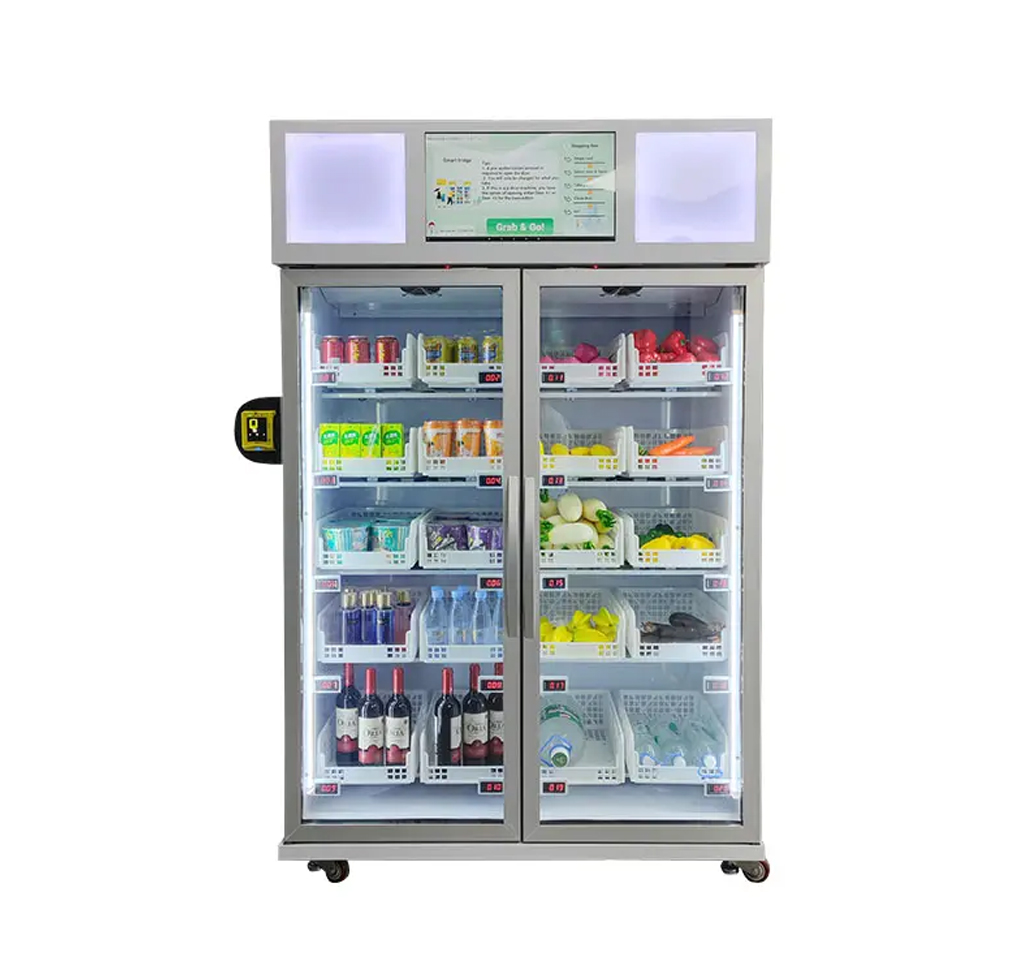
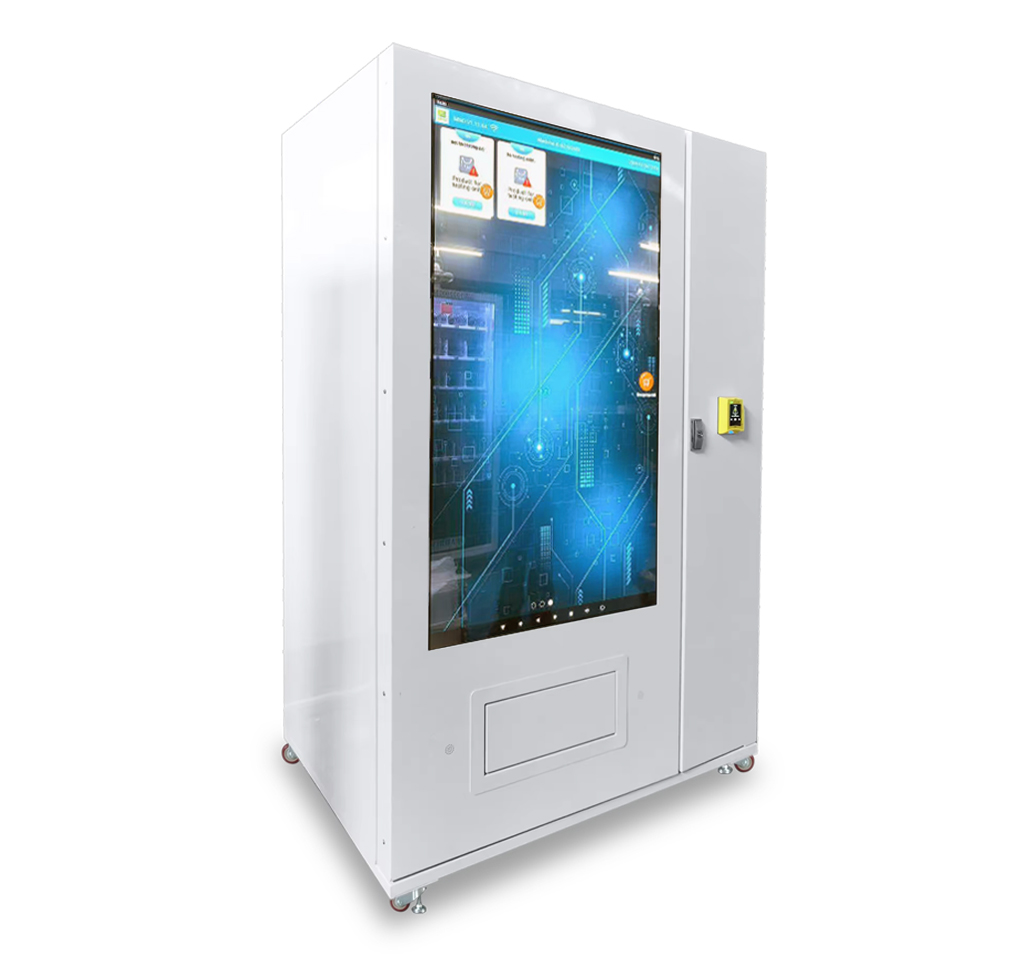
A smart vending machine is a self-contained unit that stores, dispenses, and processes payment for products within a single enclosed cabinet. Modern smart vending machines — like Minno's gravity-sensing vending machines — use tilted shelves, real-time inventory sensors, and IoT connectivity to keep restocking accurate and maintenance low, all without requiring an open retail space.
Micro Markets vs. Vending Machines: Key Differences
1. Space Requirements
Micro markets require a dedicated room or open area — generally more square footage than a single vending machine footprint. Combo vending machines and fresh food vending machines, by contrast, can be placed in a hallway, breakroom corner, or lobby with minimal space investment.
2. Product Variety
Micro markets typically offer a wider product assortment since they aren't limited by machine shelf configurations. However, modern smart refrigerated vending machines with flexible shelf layouts have significantly narrowed this gap, especially for fresh food and beverage variety.
3. Upfront Investment
Micro markets generally require a higher upfront investment — coolers, shelving, kiosk hardware, and often store fixtures or branding. A gravity-sensing vending machine offers a lower-cost entry point into fresh food and beverage retail, particularly for single-location or smaller-footprint deployments.
4. Security and Shrinkage
Because micro markets are open-access, they carry some risk of shrinkage (unpaid items), relying on self-checkout compliance and, in some cases, camera monitoring. Vending machines are fully enclosed, so products can only be dispensed after payment, eliminating shrinkage risk entirely — a major advantage for gravity-sensing vending machine and combo vending machine deployments.
5. Inventory Management
Traditional micro markets often rely on manual counts or barcode scans during restocking visits. Smart vending machines with gravity-sensing shelf technology, like Minno's, track inventory automatically and in real time — as covered in our guide on how gravity-sensing vending machines work — reducing labor and improving restocking accuracy without needing a full inventory audit each visit.
6. Location Fit
Micro markets tend to work best in larger workplaces with consistent, high employee counts and available breakroom space. Vending machines — especially combo vending machines and fresh food vending machines — are more flexible, fitting into gyms, hospitals, transit stations, small offices, and any location where space is limited but demand for fresh, cold products is high.
Which Model Should You Choose?
| Factor | Micro Market | Smart Vending Machine |
|---|---|---|
| Space needed | Larger (dedicated area) | Small footprint |
| Upfront cost | Higher | Lower to moderate |
| Product variety | Very high | High (with modern configurable units) |
| Shrinkage risk | Some risk | None (enclosed, pay-to-dispense) |
| Best for | Large workplaces, dedicated breakrooms | Gyms, hospitals, offices, transit, campuses |
| Inventory tracking | Manual or semi-automated | Fully automated (gravity-sensing) |
Many operators ultimately don't have to choose just one. A common strategy is to install a micro market in a large central location while deploying gravity-sensing refrigerated vending machines and combo vending machines in smaller satellite locations, hallways, or overflow areas — maximizing coverage without duplicating the cost of a full micro market everywhere.
How Minno Supports Both Models
Minno manufactures the smart vending hardware that powers both standalone vending deployments and micro market coolers, including:
Gravity-sensing refrigerated vending machines for fresh food and beverages
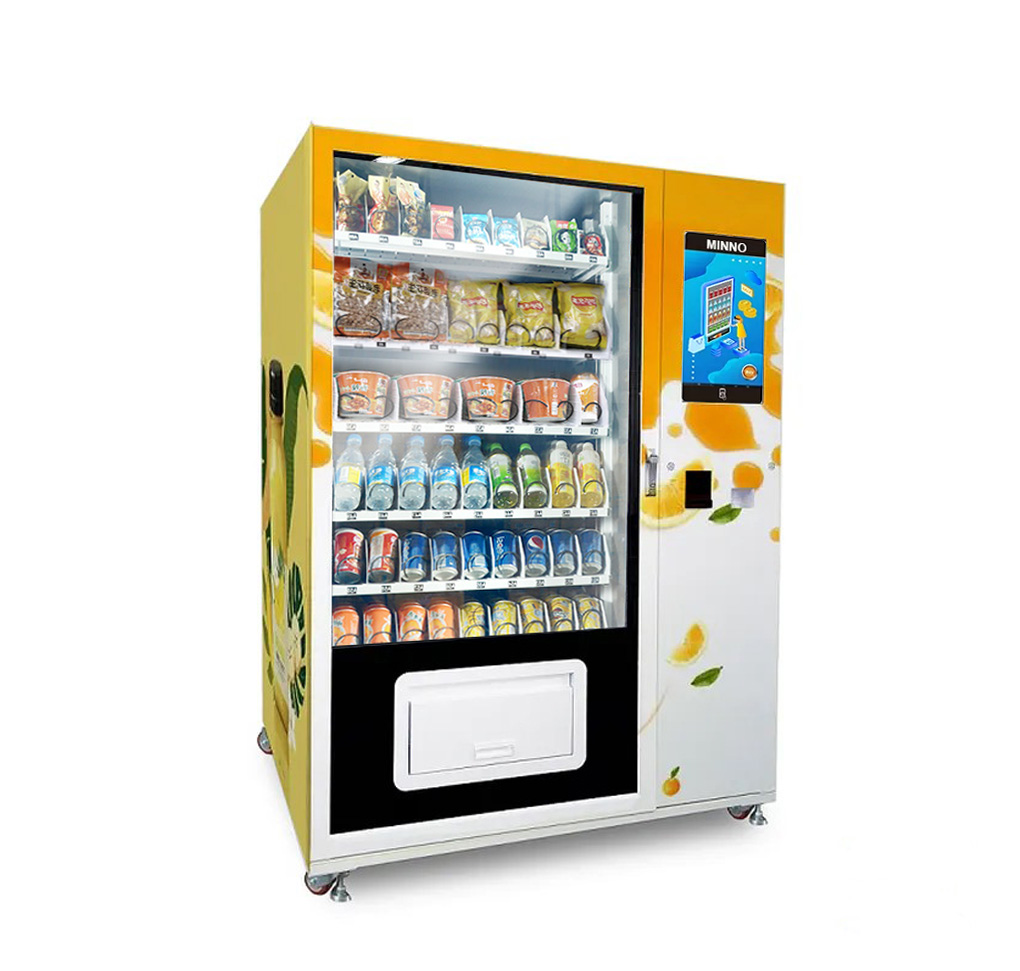
Combo vending machines for snacks and drinks
Smart cooler and shelving units suited for micro market environments
Cloud-based remote monitoring across your entire equipment fleet, whether it's five machines or five hundred
If you're still deciding between a full vending machine deployment or a micro market, our Smart Vending Machine Buyer's Guide walks through how to evaluate your product mix, space, and budget before making a final decision.
Frequently Asked Questions (FAQ)
Q1: Is a micro market more profitable than vending machines?
It depends on location size and traffic. Micro markets can generate higher total revenue in large workplaces due to wider product selection, but they also require more space and upfront investment. Smart vending machines often deliver stronger revenue per square foot, especially in space-constrained locations.
Q2: Do vending machines have theft or shrinkage problems like micro markets?
No. Because vending machines are fully enclosed and only dispense a product after payment is confirmed, they eliminate the shrinkage risk associated with the open, self-checkout format of a micro market.
Q3: Can I offer fresh food without building a full micro market?
Yes. Gravity-sensing refrigerated vending machines are specifically designed to handle fresh food and perishable items — such as sandwiches, salads, and dairy — with the same freshness and cooling performance as a micro market cooler, but in a much smaller footprint.
Q4: What locations are best suited for micro markets versus vending machines?
Micro markets tend to perform best in large offices or facilities with dedicated breakroom space and consistently high foot traffic. Vending machines, particularly combo and fresh food vending machines, are more flexible and work well in gyms, hospitals, transit stations, and smaller offices where space is limited.
Q5: Can I combine both micro markets and vending machines in one business?
Yes, and many operators do. A common approach is placing a micro market in a large central location and using smart vending machines in smaller or secondary locations to expand coverage cost-effectively.
Q6: Does Minno provide equipment for micro markets as well as vending machines?
Yes. Minno manufactures smart vending machines and cooler/shelving equipment suited to both standalone vending deployments and micro market setups, all connected through the same remote monitoring platform.
Not sure which unmanned retail model is right for you?Read our Smart Vending Machine Buyer's Guide or contact Minno's team to discuss the best equipment mix for your locations.
Our Contact
Minno Furtniture
Customize smart storage lockers,parcel delivery lockers, key management cabinet,Vending machines,Office/School and home furniture.
-
Call For Inquiry
-
Send Us Email
sales@buysmartlocker.com
Need Help For Project!
We are ready to help your next projects, let’s work together
 WhatsApp
 sales@buysmartlocker.com
 +8613213557186