

News
01
Jul
Smart Parcel Lockers Are Becoming Infrastructure — Here's What That Means for Property and Logistics Operators
Ten years ago, a parcel locker at the entrance of a residential complex was a novelty. Five years ago, it was a differentiator — something progressive developers installed to attract quality tenants. Today, in most urban markets, it's rapidly becoming what elevator access and secure parking were in earlier generations of property development: something residents expect to find, and something that's conspicuously missing if it isn't there.
This shift from amenity to expectation matters for every operator involved in the last-mile delivery chain — property managers, logistics companies, workplace managers, hospitality operators, and anyone else whose location sits at the end of a delivery route. Because once residents and recipients begin expecting self-service parcel collection as a baseline feature, the cost of not having it stops being a missed opportunity and starts being a liability.
This article is about that shift, what's driving it, and what the hardware decision actually involves when a property or logistics operator takes it seriously.
Why Last-Mile Delivery Is Broken — And Who's Paying for It
The economics of last-mile parcel delivery have been under pressure for years, and the numbers don't get better as e-commerce volume climbs. Each failed delivery attempt costs a carrier somewhere between two and four times the cost of a successful one. Redelivery scheduling creates a coordination overhead that neither couriers nor recipients actually want to manage. And the accumulation of missed delivery windows, collection depot trips, and neighbor-handoffs represents a friction layer that the entire e-commerce experience is built around, then quietly fails to solve at the very last step.
The problem isn't the carrier or the courier. It's the infrastructure at the delivery endpoint. A residential address without a secure drop point requires a person to be physically present at a specific moment — which, in a world where most adults work away from home during standard delivery hours, is a constraint the entire system is built on but shouldn't be.
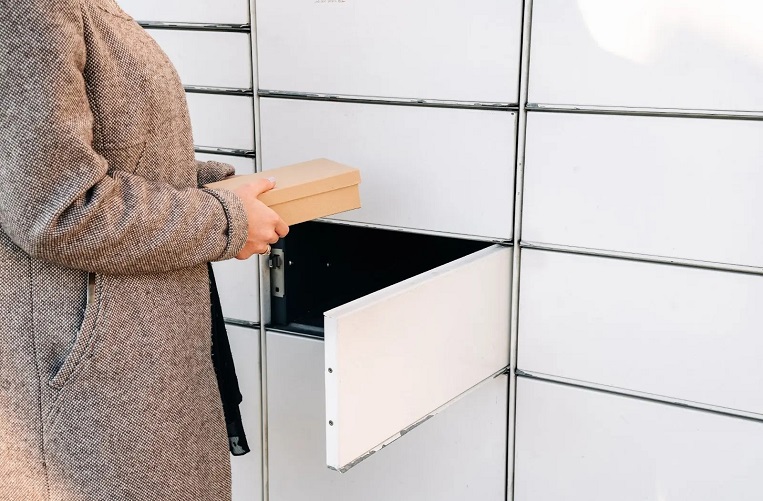
An outdoor smart parcel locker removes that constraint entirely. The courier deposits, the recipient retrieves on their own schedule, and the handoff happens without either party needing to coordinate with the other. It's a structural fix, not an incremental one.
What "Outdoor Smart Parcel Locker" Actually Means in Hardware Terms
The category label covers a lot of ground. A basic key lockbox and a multi-carrier smart locker with RFID sensors and a cloud management platform are both technically "parcel lockers," but they solve different problems at different scales.
The MINNO MNP-004 Outdoor Smart Parcel Locker sits at the serious end of that spectrum — designed for high-volume multi-carrier use in commercial and residential environments, with the build quality and software integration to function as genuine shared infrastructure rather than a basic drop box.
A few specifics worth understanding:
Construction. The cabinet is built from high-quality cold-rolled steel with powder coating — the same material specification used in security equipment where long-term outdoor durability is a hard requirement, not a marketing claim. Cold-rolled steel is denser and harder than hot-rolled alternatives, which matters for both structural integrity under load and resistance to tampering over years of outdoor exposure. The powder coating seals the surface against moisture and UV degradation in a way that paint finishes degrade over time.
Compartment configuration. The MNP-004 supports between 30 and 100 compartments, configurable to the expected parcel mix of the specific deployment. A residential building receiving mostly small e-commerce packages needs a different tray mix than a logistics hub handling mixed freight. This is a specification decision, not a catalog selection — and it's worth getting right at the start rather than retrofitting.
Access and authentication. The 21.5-inch touchscreen terminal handles courier registration and deposit, recipient authentication and retrieval, and operator management access. The interface runs on a standard commercial OS, which means software updates follow a normal update pathway rather than requiring manufacturer visits. QR code scanning and label recognition are built in, which means couriers from different carriers can use the same terminal without platform-specific integrations or app installations.
Notification system. When a courier deposits a parcel, the system automatically generates a unique retrieval code and sends it to the recipient via SMS — instantly, without staff involvement, without an app requirement on the recipient's end. The recipient receives a text, arrives at their convenience, enters the code, and the correct compartment unlocks. The entire sequence happens without a single human intermediary.
Connectivity. The unit runs on Wi-Fi as standard, with LAN/WAN connectivity available for enterprise deployments or multi-unit installations that benefit from centralized management. 4G connectivity options exist for locations where fixed-line connectivity isn't available at the installation point.
The Software Layer: Why It Matters More Than the Hardware
A common mistake in evaluating parcel lockers is treating the hardware as the product and the software as a feature. In practice, the software is what determines whether the system scales, whether it integrates with existing workflows, and whether the management overhead of running a locker network is actually lower than the manual process it replaced.
The MINNO management platform handles the following remotely:
Real-time compartment status. Operators see which compartments are occupied, which are available, and which have flagged issues — across every unit in their network, from a single dashboard, without visiting a single machine. For a property management company running lockers across twelve residential buildings, this remote visibility is what makes the system manageable at scale.
Overdue parcel alerts. Parcels that remain uncollected beyond a configurable threshold trigger automatic alerts — first to the recipient, then to the operator if the parcel remains in the system. This replaces the manual process of periodically checking which compartments have been occupied too long, which in practice usually doesn't happen until someone complains.
Courier management and access control. Courier registration is handled through the terminal, with operator approval through the backend. For operators who need to control which carriers have access — or who want to audit carrier activity retrospectively — the system maintains a full access log with timestamps and user identifiers.
Remote screen management. The terminal's display runs advertising and informational content between transactions. Operators can upload and schedule promotional material, manage screen brightness, and switch the display off during low-traffic overnight hours — all remotely, without visiting the unit.
API integration. The backend supports API-level integration with third-party systems — property management platforms, courier company software, enterprise logistics tools. For operators who run existing digital infrastructure and need the locker to be part of that system rather than a standalone island, this integration capability is the feature that makes the difference between a smart locker and a genuinely smart building component.
Multi-unit centralized management. For operators running more than one unit, LAN/WAN connectivity allows all units to be managed from a single interface. Consistent settings, simultaneous updates, and aggregated reporting across an entire locker network become operational rather than aspirational.
Deployment Contexts: Where This Hardware Actually Gets Installed
High-rise residential and apartment complexes. The most common deployment, and the one driving the expectation shift described at the start of this article. A locker bank at the building entrance or in a dedicated delivery bay handles the full volume of resident parcels without reception involvement, without lobby congestion, and without the daily friction of missed deliveries and redelivery scheduling.
Gated communities and serviced residences. Where security is a primary concern, the smart parcel locker extends secure access to the delivery process without requiring couriers to enter the secure perimeter. The locker sits at the boundary; residents access it from inside. Neither the courier nor the parcel ever needs to come through the main gate.
Corporate office campuses and coworking spaces. Employees who order personal items to their work address shouldn't require reception staff to manage storage, sign-in, and notification. A locker positioned in a lobby or mailroom corridor removes the entire administrative layer, freeing reception for the interactions that actually require a human.
Logistics hubs and express delivery stations. The MNP-004 is explicitly designed for this use case — as a deposit and collection point for courier operations, handling the transfer between delivery vehicle and recipient at a fixed, secured location. For last-mile logistics operators building out collection point networks, the combination of multi-carrier access, cloud management, and API integration is what makes the hardware worth deploying at scale rather than as a single trial unit.
Hotels and short-term rental properties. Guests who order items for delivery during a stay, or who check out before a delivery arrives, present a specific logistics problem that front desk staff currently absorb. A smart parcel locker in the lobby or service area moves that burden off the front desk entirely — with the added benefit that the transaction is logged, timestamped, and auditable if a guest disputes whether a parcel was received.
Universities and student housing. Student parcel volume peaks significantly at certain points in the academic calendar and during major e-commerce events. A mailroom that handles 40 parcels on a normal day may receive 200 on a peak day. Fixed staffing doesn't scale to handle that variance; a smart locker system does, because the automation layer doesn't have capacity constraints in the same way.
Mixed-use retail and commercial developments. Click-and-collect functionality — where an online retailer or marketplace designates a locker as a pickup point — is an increasingly common deployment model. The retailer benefits from a physical collection point without the overhead of staffing it; the development benefits from foot traffic generated by collection visits.
Customization Options Worth Knowing Before You Specify
The MNP-004 is designed around configuration rather than catalog selection, which matters because the right installation looks different in different contexts.
Compartment count and sizing. The 30-to-100 compartment range is a starting point. The actual configuration — how many small compartments versus how many larger ones — should reflect the expected parcel profile of the specific location. This is worth modeling against actual data if the deployment is replacing an existing manual process that has generated volume data.
Exterior finish and branding. The locker can be finished in any RAL color, and door panels support custom artwork and logo printing. For property developers who care about visual cohesion, hotel groups building a branded guest experience, or operators deploying co-branded lockers in partnership with a carrier, this flexibility means the hardware integrates visually rather than contrasting with its surroundings.
Screen size. The standard terminal uses a 21.5-inch display, which provides visibility from several meters away in a typical lobby or entrance area. A 10-inch option is available for deployments where the terminal footprint needs to be smaller or where the location constrains screen size.
Payment integration. For deployments where the locker is used as a paid storage or click-and-collect service, payment modules — card terminals, QR code payment systems, and other local-market payment methods — can be integrated at the specification stage.
Rain shelter and weather accessories. Fully exposed outdoor positions benefit from additional weather protection on the terminal and door seals. Optional rain shelter accessories can be specified for the installation; the appropriate level of protection depends on the climate of the deployment location and the degree of exposure.
Language. The terminal interface supports full language customization. For international deployments or mixed-language user bases, multi-language interface configuration removes a usability barrier that most standard-catalog systems ignore.
Pre-Installation Questions Worth Asking
Before finalizing any outdoor smart parcel locker specification, a few practical questions save significant friction later:
What is the expected daily parcel volume, and how does it vary across peak and off-peak periods? Compartment count and size mix should be modeled against realistic throughput rather than average daily volume — a locker sized for average days may fill completely during the peaks that matter most.
Who manages the locker operationally, and what does that involve? A property management company with a facilities team handles this differently than a small residential developer who doesn't have dedicated operations staff. The management platform's remote capabilities need to match the operational reality of whoever is running it.
How does the locker integrate with existing digital infrastructure? If the building has a resident app, a property management platform, or existing access control systems, the degree of integration possible through the API should be confirmed before the purchase — not after.
What is the power availability at the intended installation point? The unit requires a standard power connection; verify that the intended location has accessible power supply before finalizing the position.
What is the physical access plan for restocking, maintenance, and emergency manual access? Outdoor installations that are difficult to access physically create operational problems when maintenance is needed. Plan the access route before the concrete goes in.
Frequently Asked Questions
Q: Can parcels from multiple courier companies be deposited in the same locker?
Yes. The MINNO MNP-004 supports multi-carrier access. Couriers register through the terminal once and can use it for subsequent deposits regardless of their company. The system identifies each transaction by courier, parcel, and timestamp rather than by carrier-specific integration, which means carriers from different companies can use the same unit without platform conflicts or proprietary terminal agreements.
Q: What happens to a parcel that isn't collected for several days?
The management platform tracks how long each compartment has been occupied and triggers configurable alerts when a parcel exceeds the operator's defined threshold. Recipients receive a reminder notification. Operators can see exactly which parcels are overdue and take manual action if needed. The specific escalation process — including whether the parcel is returned to the carrier or held for extended pickup — is configured by the operator in the backend to match their own policy.
Q: How secure is the locker against forced entry or tampering?
The cold-rolled steel construction with powder coating provides genuine physical resistance rather than cosmetic durability. Each compartment is independently locked, which means a tampering attempt on one door doesn't compromise the others. The system logs all access events, including failed authentication attempts, which creates an audit trail for any security incident. The emergency mechanical lock provides manual access for the operator in authorized circumstances.
Q: Does the system work if the internet connection drops?
Transactions can complete locally if the connection is temporarily interrupted. The system queues data and syncs when connectivity is restored. Remote management features — real-time inventory monitoring, remote screen management, alert notifications — require an active connection to function. For locations where connectivity reliability is a concern, 4G connectivity as a backup to Wi-Fi or LAN is worth specifying.
Q: How is the locker maintained, and who handles it?
Software updates are pushed remotely through the management platform — no technician visit required for software maintenance. For hardware issues, MINNO provides technical support including video-assisted troubleshooting. The hardware warranty covers defects under normal operating conditions. Maintenance requirements for the physical unit are minimal given the limited number of moving parts — the door mechanism and locking system are the primary maintenance surfaces.
Q: Can the locker be integrated with a building's existing resident app or property management system?
API integration is available, which allows the locker system to communicate with third-party platforms. The specifics of integration — what data is shared, what actions can be triggered remotely — depend on the capabilities of the existing system and should be confirmed during the specification stage. For enterprise deployments where deep integration is a requirement, this is a pre-purchase conversation rather than a post-installation project.
Q: What is the minimum space requirement for installation?
The physical footprint of the MNP-004 is determined by the compartment count and configuration specified. The locker is pre-assembled before shipping, so the installation requirement is primarily positioning and anchoring at the site and connecting the power supply. A site survey before finalizing the compartment configuration is the standard approach for ensuring the unit fits the intended space correctly.
Q: Is the locker suitable for tropical or high-humidity climates?
The cold-rolled steel with powder coating finish is designed for outdoor durability across a range of climates. For tropical deployments with high humidity and regular rainfall, the rain shelter accessory and attention to door seal specification are both worth discussing with the MINNO team before ordering. Climate-specific configuration is standard practice for deployments in challenging environments.
For specifications, configuration options, and quotes on the MINNO MNP-004 Outdoor Smart Parcel Locker, visit buysmartlocker.com
Our Contact
Minno Furtniture
Customize smart storage lockers,parcel delivery lockers, key management cabinet,Vending machines,Office/School and home furniture.
-
Call For Inquiry
-
Send Us Email
sales@buysmartlocker.com
Need Help For Project!
We are ready to help your next projects, let’s work together
 WhatsApp
 sales@buysmartlocker.com
 +8613213557186